In the Spring of 1977 I was sent in a team of union laborers to the Trojan Nuclear Power Plant for the yearly maintenance shut-down. For a month we worked six and seven-day weeks, ten to twelve hours a day, at the best wages I’d ever seen personally. I call it a “holiday” for the simple reason that there was practically no work for us to do, and we filled all those hours as best we could with naps, conversation, cards, reading matter, getting loaded, and staring into space.
Trojan. Who on earth picked that name for the only nuclear power facility ever built in Oregon? The plant’s logo featured an image of the head of that famous wooden horse left as an insidious gift at the gates of Sparta. In 1970, like the unsuspecting Trojans before us, Oregonians opened the gates and wheeled in this icon of modern technology. In the years that followed, many grew to mistrust this gift horse, peered into it’s mouth apprehensively, and lobbied for it’s removal. Arguing the other side were such folks as the Governor of Washington: “Well, eating is more dangerous than nuclear power. After all, 300 people died in the US last year after choking on their food.” The Governor of New Hampshire contributed: “We had a shark problem off our beaches a few weeks ago, and if we can handle the sharks I guess we can handle nuclear power.”
In 1993 Trojan was shut down after a series of malfunctions and finally an unprecedented agreement between environmentalists and Portland General Electric that in the long run it would be cheaper to close the facility than to keep it open. Today it stands empty except for a large cache of nuclear waste we still have no other place to warehouse. While nuclear power may seem a dead horse in 21st century America, I can tell you that as of this writing (May 2017) there are still over 61 nuclear power plants operating in the USA. I hope (but do not know) that they have their act together better today than in the 1970s. I can tell you what I saw in the belly of the beast in 1977, and you may draw your own conclusions.
ROLLING IN MONEY
When Portland General Electric (PGE) began construction of Trojan on the banks of the Columbia River in the early 1970s, several friends of mine in Astoria (50 miles down river) found employment there at various stages of the work. The stories they told were hard to believe. Lots of overtime, plus Saturdays and Sundays at time-and-a-half or double-time, meant that even the lowest-paid crafts were grossing over $500 a week, with as much as $1000 not uncommon. At the same time the work pace was at an all-time low. Scores of men with nothing to do were given brooms and told to look busy. Many sought out places to sleep, play poker, drink, smoke, and BS. With everybody rolling in money, drugs of every description and even women were available in the employee parking lot. By the time I got there, there were many legendary stories from those construction days, for example the fellow who only showed up once a week — to pick up his check. After a few months of this he was discovered and discharged, but he symbolized the absolute minimum effort necessary to get by on the Trojan project.
And so it went for several years, but then, just before the job was finished, a legal challenge by environmental groups threatened to shut down the whole project. PGE’s answer, well one of them anyway, was to hire hundreds of extra men for whom there was absolutely nothing to do, and for the last few months the place was literally awash with surplus workers. According to my friends, it got so crowded that it was difficult to find a good place to sleep anymore. Apparently PGE calculated that the working man would take the cash and tell the environmentalists to bug off. This ploy seems to have characterized the company’s public relations strategy from the get-go.
KEEP BREATHING UNTIL QUITTING TIME
At 8 AM I joined a group of about 100 men milling around in front of the plant’s entrance building, where every worker passes in and out under the scrutiny of armed guards and metal detectors. No one was allowed inside the perimeter fence until he had been oriented, photographed, checked over with a Geiger counter and badged. For the next three days we were briefed on safety regulations and radiation control procedures, and given a rudimentary explanation of the plant’s operation. Afterwards there was a written exam. Those who passed were issued little blue cards, those who failed got little yellow cards, and the next day we all went to work
Ten of us climbed down a metal ladder into a subterranean corridor that runs in a full circle under the reactor silo. There we were shown a pile of thick grease which had leaked out of an overhead valve. We cleaned this up in about half an hour with four or five working and four or five watching. The rest of the day we spent shooting the breeze and pitching pennies against the corridor wall.
The next day they sent us down to the new sewage treatment plant outside the gates. Trucks pulled up and dumped loads of gravel, but there was no backhoe to spread it, so about twenty of us spent the day doing with shovels what a machine could have done in about an hour. Every couple of hours our foreman would pay us a visit, and far from being dismayed at our slow progress, he would drawl, “Take your time boys, we’re not in any hurry here. Just take it easy…”
Among us was a country-western musician who was worried about the upcoming division into day and night crews, as a night crew assignment would interfere with his music jobs. The last time our foreman came around, the musician brought up his problem. The reply was swift and final: “Well if you don’t want to work nights, maybe you better just go down the road and pick up your check,” and that was it for him. On the spot I learned that at Trojan it mattered not who you were, what you could do, or how hard you worked — just be there in the morning, keep breathing until quitting time, and keep a low profile.
HOT TIMES
On a Saturday morning we entered “containment” for the first time. The containment building contains the reactor itself, and is the silo-shaped structure with the dome roof visible from the highways on either side of the Columbia River. We all wore bright yellow protective suits and hoods, with orange rubber gloves and black and yellow galoshes. The only exposed part was the face from hairline to chin, and the total effect pretty bizarre. After a time I came to realize that this uniform breeds a certain equality inside containment as nobody can tell who you are or what your job is. Unless you were familiar with a particular face, it was impossible to tell the plant supervisor or a nuclear physicist from the lowliest laborer (me). Containment was also the only area that was free of the many security guards so numerous in all other parts of the plant, and unless someone failed to obey posted instructions, such as changing into clean boots when emerging from a particularly contaminated area, one’s presence there was never challenged. This made containment one of the most popular places for sleeping, and it was a common sight to see yellow-clad bodies sprawled like disaster victims along the halls and decks of the reactor silo.
Inside it was hot. The reactor was still in the process of cooling off, having been shut down only 24 hours before. We were given wet Kimwipes and told to wipe down all surfaces: walls, pipes, tanks, floors, and railings, and then to put the soiled wipes into big plastic trash bags. As I made my rounds I discovered a large ventilating fan sucking air out, and I stayed as close to it as I could to relieve the oppressive heat.
On the way out of containment, my moustache turned out to be “hot” (radioactive) enough to set off the alarm on the Geiger counter we were frisked with by the radiation control engineer. They told me that, possibly as a result of hanging out near the exhaust fan, I had been exposed to some radioactive gas that had leaked into the air. I was instructed to wash carefully. That particular isotope was short-lived, and shaving off my moustache was deemed unnecessary. Another fellow was not so lucky and had to have some of his hair cut off after something dripped on his head and soaked through the cloth hood. We were advised of the importance of keeping our suits dry.
We made three trips into containment during that ten-hour working day. Each time we wiped for an hour, the rest of the time was consumed in getting dressed and undressed, resting, and playing poker. It was one of most strenuous days I was to experience at Trojan.
The next day was Sunday, scheduled as a twelve-hour shift paying double-time. The original plan was to continue wiping things down in containment, but that program was abandoned for some reason, and we spent all day making $15.74 an hour wandering around with a broom and dustpan sweeping up. Since the actual maintenance work hadn’t really begun yet, the big turbine room I had been assigned to was immaculately clean, and my entire output for the day yielded half-a-dozen cigarette butts, a few sunflower seed hulls, and a handful of dust.
The same days’ Oregon Journal carried a full-color front page photo of the big turbine I had spent the day dusting, and a headline that read: “PGE ASKS FOR 8% RATE HIKE.” I read the story with interest. It seemed that PGE (known among the workers at Trojan as “Portland Generous”) not only had to have this increase, but that it was an emergency — they had to have it right now. This meant that instead of going through regular channels they were applying directly to the Public Utilities Commissioner. (The good Commissioner later denied this urgent request.)
COST PLUS CALYPSO
During my first week I heard a lot of stories about the work pace and the “cost plus” contract. Cost-plus means simply that the contractor is paid whatever it costs him to complete the work, plus an agreed-upon profit margin. Hence they could care less how many guys had nothing to do as long as the work got done more or less according to schedule. One morning over breakfast in Ranier with a pipe fitter, I was told that he and 75 other pipe fitters had been on the job for two weeks at $100 a day before they were given any pipes to weld. A few seconds with a pencil and I was looking at $76,000 from Portland Generous. This fellow also confided to me that the day they asked him to work inside containment would be the day he went looking for another job.
Many of the older laborers were assigned to “fire watch,” which consisted of watching a welder and standing by with a fire extinguisher in case something caught fire. Since everything at Trojan was either steel or concrete, the chance of fire was remote. In any case, most of the time the welders were simply sitting around smoking cigarettes. Most people who work with their hands find it difficult to sit and watch somebody else work. But to sit and watch somebody else not work does something funny to one’s sense of values and the idea of making an honest living. At least one young man I knew soon quit in disgust and boredom and went to look for an actual job of work. I hadn’t been dispatched to a job all the previous winter, had been fined twice by the Union for falling behind in my dues, and had eked out an existence by delivering newspapers and pumping gas. I stayed on.
Workers fell into petty disputes over territory. Once I was called in to clean up some oil in a catch pan under a machine that the millwrights had been working on. Glad to have something to do for a change, I cleaned up the oil and then began wiping up some smears of grease on the front of the machine. As I was doing this, my foreman came up and told me he had received a complaint that I was infringing on millwrights’ work by wiping the machine and had better desist immediately. Some gung-ho union men with nothing else to do were always on the lookout for a carpenter with a shovel in his hand or a laborer with a hammer, for which they could apparently send the offender “down the road.”
On the maintenance crew, all the workers were issued blue hard hats while the foremen wore white hats. After a while I began to notice just how many white hats there were, and I started keeping count. These white hats never did a lick of work, they just wandered around checking on their crews (if they could find them) and chatting with each other. When my count reached 25 I gave it up; I would estimate one white hat for every 7 or 8 blue hats. The white hats performed other important tasks such as running the weekly check pool. They would collect $1 from anyone interested and determine the winner from the configuration of numbers on our paychecks. In our carpenter-laborer pool there was usually about $100. Winners were pressured to buy a keg at the local tavern after work.
THE FLOOD
During my second week on the job there was a serious mishap in containment. Some workers were asked to remove a metal plate from a boiler, and when they did so, out poured 1500 gallons of highly radioactive water, flooding the entire ground floor of the reactor silo. For some reason, a lot of the drains did not function at all, and so we (the laborers) were called in to mop up the mess. For this job we were provided with full-face respirators as well as the usual protective gear, and wore two pairs of galoshes instead of one. With mops and brooms we got the water into buckets or swept it into the drains that did work, while all around us Geiger counters buzzed like angry wasps. Many parts of the ground floor are a maze of pipes and boilers, and consequently this was slow and awkward work. The task of wiping down and thoroughly decontaminating the whole ground floor was apparently too much for the plant management to contemplate, so this was done only in areas where maintenance work had to be done, and the other areas were cordoned off with warning barriers for the remainder of the shut down.
Around this time I began to take a personal interest in all this radiation, and one day I picked up a Geiger counter and began to check for myself. Some areas of containment appeared to be relatively uncontaminated, while others (such as the cordoned-off areas mentioned above) emitted a blast of radiation that set my instrument to chattering wildly. In the subsequent weeks I was seen with a Geiger counter so often that a lot of people began to assume I was a radiation control engineer. Sometimes I would find a group of men lounging in a particularly hot area and would tell them so, but they usually ignored this information and went back to their chit-chat. A lot of the workers seemed to take the attitude that “a little more radiation isn’t going to hurt me now,” and there was a black sense of humor in their conversation. Radiation cannot be seen or felt, and once you have taken this fatalistic attitude, it is easy to pretend it isn’t there.
In the aftermath of the flooding accident there was increasing attention paid to the changing of gloves and galoshes when passing from the ground floor to other less-contaminated areas, and I was assigned a daily detail of collecting, bagging, and packing out contaminated gear, and bringing in fresh supplies of galoshes and gloves. This usually took less than an hour, and there was nothing to do on the outside except for fire watch and broom patrol, so I searched around for a quiet spot to nap. I finally found a spacious cubbyhole well off the beaten track, and checking with the Geiger counter found it to be practically free of radiation though I was only about 50 feet from the reactor’s core. Following the example of less reclusive sleepers I had observed in containment, I fashioned a comfortable air mattress out of the big plastic trash bags and brought in a small alarm clock to wake me up for lunch. The long, boring days at Trojan, the two hours driving back and forth from Astoria, and the all-night domestic wrangles I was going through at the time were ameliorated by the three or four hours of daily sleep I averaged in my reactor rest house for as long as the work went on in containment.
When the mopping up operation was concluded, a team of experts came in to research and repair the cause of the accidental spill. They set up a battery of instruments and TV monitors in a decontaminated section of the ground floor, and I watched with interest over their shoulders as they sent remote control TV camera probes into various parts of the reactor. What the cameras picked up was displayed on the monitor screens, and this process went on for several days.
A few feet behind us in the corridor there was a leaking water pipe overhead, and remembering the fellow who’d gotten a free haircut after out first day in containment, I decided to file a report on this hazard as we’d been instructed during our orientation days. When I handed it to my foreman, he gave me a blank look and said, “I don’t know what to do with this — try the boys in radiation control.” The rad-con men glanced at my report and told me to deliver it to so-and-so on the top floor of the adjacent building.
When I arrived by elevator at the top floor, I suddenly found myself in the main control room. It looked just like scenes from “The China Syndrome,” a 1979 movie about a near-meltdown at a nuclear power plant that by coincidence was released the same month that the reactor at Three Mile Island in Pennsylvania suffered a near-meltdown and effectively put an end to the construction of any more nuclear plants in this country. The room was a vast array of meters, lights, buttons, knobs, switches, and monitor screens of every size and description. Nobody paid the least attention to me, so I loitered awhile taking it all in before delivering my note and returning to terra firma.
Several days later I ran across a pair of very nervous plumbers wandering around in containment. This was their first trip into the reactor silo and they weren’t a bit pleased about it. I showed them the leak and went off to have a nap. When I awoke several hours later, I found that they’d taped a sheet of plastic to the leaky pipe, diverting the drip to one side of the footpath, and gotten the hell out of there. This might be a good time to mention that it seemed as if leak repair was the main activity during shut-down maintenance: pipes, valves, boilers — drip, drip, drip everywhere.
WATCH THE CRANES
One morning my foreman approached me with a huge grin on his face. Trying his best to be serious, he explained that he had an important special assignment for me. Word had come down from on high that a number of men had been found, upon emerging from containment, to have somehow contaminated their private parts with radioactivity. This unfortunate epidemic was thought to have resulted from an influx of pornographic literature apparently smuggled into the reactor silo. My job: find and confiscate these fuck books.
Armed with this warrant and a plastic bag, I began a thorough search of the area, taking my time as always. Whether you favor or oppose nuclear power, the scale of the technology is impressive. As I toured the reactor building I contemplated the massive complex from every angle. At the top of the silo, a gigantic crane spans the diameter, big enough to lift anything that lies below. The operator reaches his control booth on the crane by means of a small metal ladder fastened to the wall, climbing another 100 feet above the highest scaffold — about 200 feet above the ground floor. From this dizzy height you have panoramic view of the entire reactor, and it was here that I found the hottest contraband. The word must have gotten out that my patrol was on it’s way because so far I had found only a few tattered copies of Playboy and Penthouse, but in the crane operator’s cubicle I found one of those green-covered novels from the Olympia Press in Paris. It dealt with various activities of randy young schoolgirls, dirty old men, and big German Shepherd dogs. Moral: always watch your step around cranes — the driver might be going blind.
THE PINK SLIP
One day the big news over lunch was that the plant superintendent, taking a federal inspection team on a tour of the facility, had walked right into the middle of a big poker game taking place behind a boiler in the turbine building. The poker players had been “severely reprimanded,” but when the work was nearly completed and I got laid off, the poker players were still on the job. Yes, after a month on the job that old pink slip turned up in my pay envelope, and counting up the totals I found that I’d made over $3000, a fortune to me at the time. Celebratory partying followed immediately, and soon ate up all that easy money. I quit the Laborers Union.
That Summer I returned to Trojan for a series of protest demonstrations, aiming to bite the hand that had fed me so well. One morning I spotted the plant superintendent Bart Withers, in a white hat, strolling just inside the fence. We had a brief conversation through the chain link mesh. “I worked here during the shut-down this year,” I told him. “Why was there nothing for us to do?” “Well…uh,” he replied, “we had some delays getting some of our materials.”
POSTSCRIPT
In 2005 the decommissioned reactor was gift-wrapped and shipped to the Hanford Nuclear Reservation in Washington State and buried in a pit under 45 feet of gravel. On May 20, 2006 the cooling tower was turned into rubble in a controlled demolition implosion while environmentalists in boats on the Columbia cheered. The spent fuel is still stored on site in 34 dry casks. It was supposed to be sent to the Yucca Mountain Repository until that project was de-funded by Congress in 2011.
Astoria, Oregon to Hawaii to Samoa • June 1979 – December 1980
Thirty-seven years ago I left my home on the Oregon coast with a one-way ticket to Maui and $200, looking to see if a guy could still make it around the world on a shoestring. I was old enough to have some survival skills, and young enough to put up with a lot of discomfort. Did I make it? Stay tuned. “Apprenticeship” describes how it all started.
As 36 years later I reformat this piece typed out in 1980 in New Zealand, I must point out that I am describing my experience as extracted from my journals. My perceptions of life in Hawaii were largely negative, partly due to the fact that I was what we would now call homeless and broke. On the other hand my impressions of life in Samoa were largely positive and my situation there was largely the same. Times may have changed in both places since 1979; I know that I have changed. Things may be better in Hawaii now, or worse in Samoa. I calls em like I sees em…or saw them at the time.
Astoria, June 2016
The author in 1979
I arrived at Honolulu airport just before sunset, June 19, 1979, and stepped out into the muggy tropical air somewhat fuzzy from too many drinks on the plane. Underneath the intoxications of the moment I was exhausted. For a solid year I had been working full tilt towards this moment, the dawn of a dream I’d nourished for so many years: to circle the globe with a pack on my back and see as much of this world as possible. I had no major motivation other than curiosity, a persistent curiosity that has led me down many strange and various paths in my 37 years. The fact that it hasn’t killed me yet I can only attribute to dumb luck. If it does tomorrow I’ll have no complaints.
Honolulu airport has no walls. It’s your first look at a phenomenon that will confront you constantly in the tropics. There is a roof that keeps out most of the rain. I suppose a hurricane would blow rain right through the place, but who goes flying in a hurricane? I walked to the baggage area past gorgeous girls with arms full of fragrant leis. They were apparently not waiting for me.
You soon find out that for the visitor there are three Hawaii’s, depending on whether you are (1) rich and there to indulge your every whim, (2) not rich and there on a tour, doing the best you can on a limited budget, or (3) a poor adventurer intending to live by your wits. In the first case you will travel everywhere by taxi and rented car, stay in plush hotels, eat in restaurants, shop in exclusive establishments where quality and taste are exceeded only by the price, rent yachts to take you sailing and helicopters to take you flying, and be able to command any conceivable service for your comfort and amusement at the wave of your hand (and checkbook) in the warm and languid embrace of one of the world’s most strikingly beautiful and cosmopolitan resort areas. You will also spend enough money in a week’s time to send traveler #3 around the world at least once and by plane yet. (In 1979 one could still buy a ticket for about $2000 that would fly you around the world with some flexibility as to route and a year to complete the trip.)
If you are traveler #2, the gorgeous girl at the airport will give you a lei, a handsome man will escort your group to an air-conditioned bus, and for the rest of your trip you will rarely lose sight of those smiling hosts or that air-conditioned bus as they ferry you from one site to another and then back to the hotel. If you can afford to go out at night you will tend to stay in a large group to discourage muggers. You will end up spending at least $100 a day without doing any shopping. You’ll have a fine time (unless you get mugged) and when you get home sunburned and friends ask you how it was, you’ll say, “It’s beautiful!” Which it is, except for all those hotels and air-conditioned buses.
If you are traveler #3 and not an attractive young lady, you are in for a rough time. Aloha is not for you, for you it is dead and buried. People will look past you, around you, over you, through you. They will not answer your hello. If you have no money, most people you meet will take an interest in you only if they can get you to work for nothing. There are still some beautiful beaches accessible to all, but if you linger there after dark you stand an excellent chance of being hospitalized by young Hawaiians angry at being cut out of the island’s grandiose economic pie, having long since sold their lands or had it given away for them by the last Hawaiian kings and queens anxious to fill their palaces with Victorian bric-a-brac. In short, nobody wants you around. The “haves” will ignore you, and the “have-nots” will cut your throat just for sport. You are not the first naïve adventurer to come down this road.
But I hadn’t a clue to all this as I threaded my way through the tour groups already lining up in bunches here and there. Besides I had friends expecting me on the island of Maui, and I was planning to sleep for a week. My flight to Maui wasn’t until the morning, so I threw my bags in a locker, grabbed my fiddle and walked out of the airport. Someone had told me that the airport was close to downtown Honolulu, and I had visions of walking around those towering hotels, perhaps sitting by a fountain and fiddling a 16th-century tune as the beautiful people floated past…a world away from my homestead in Little Walluski. It soon became obvious that nobody walks out of Honolulu airport. There wasn’t even a sidewalk. I hardly got a mile when I ran up against a seemingly impenetrable barrier of freeways and chain-link fence. Downtown Honolulu was nowhere in sight. At this point the Spirit of Adventure finally ran out of gas, and with my fiddle for a pillow I went to sleep on a plank under a scaffold in an empty lot.
* * *
The road is an old friend of mine and has sustained me in the best and worst of times. I think of the sky, the land, and the sea in somewhat the same terms, but their’s is a more passive companionship. I feel good with one above and the other below much as one feels good when standing between two old friends, but it’s the road I turn to when I need help, to get into a good place or out of a bad one. There is poetry in motion, time becomes visible. The landscape flows and changes like clouds in the sky, like a pinecone in the fire. Nine months earlier the road had led me like a seeing-eye dog to a little hilltop apple orchard near Hood River, Oregon where, against wild odds, the clouds opened up for half an hour and I enjoyed an unobstructed view of the total eclipse of the sun.
The Spring of 1978 found me testing out the road again after some years absence. I had been traveling around the Pacific Northwest all fall and winter with an itinerant old-time banjo and fiddle band called the Famous Potatoes and I loved it. When the lure of a fishing job on a salmon troller took our banjo player and reduced our ranks from 4 to 3, the remaining Potatoes decided to drive our panel truck to Maine, as usual playing in taverns and passing the hat for food and gas money as we went. In New England I took off on my own and spent most of my time going to contra dances, the old-fashioned figure dances from British and Yankee tradition, still danced for social recreation in hundreds of New England communities as they have been for the past 200-300 years. In New York, New Jersey, Massachusetts, Connecticut, Vermont and Maine, for five weeks I averaged better than a dance every three days. I returned to Astoria the last week of June, having spent nine months on the road and found it still to my liking.
I went to work on my homestead with the idea of tying up loose ends, bringing things up to a level where I could absent myself for a number of years without worrying unduly that 10 years of effort were coming unraveled behind me. My friends didn’t see a whole lot of me in my last year at home, and the few who ventured out to see what was going on were no doubt startled to find that not only had I finally finished the roof, but running water, half an acre of grass, and a real telephone had suddenly intruded on my formerly pioneer lifestyle. I felt badly about having to seclude myself in the interest of getting things done. Astoria is my home, and I love it dearly. Some may think that I left to find another, but it isn’t so. In the past 18 months I have landed in some of the world’s most prestigious paradises and have never in the least been the least been tempted to forsake my home in the Oregon woods. The reasons for this are various and will crop up in the narrative to follow.
In any case Astoria has been my home for about 15 years now and I have many friends there in all walks of life whose paths have crossed with mine at some point along my erratic course. I wanted to leave something behind me in their midst until such time as I should find my way home again. I had been impressed with the old traditions of country dancing in New England. For four or five years some of us had attempted the same type of thing in Clatsop County, but it tended to be a sporadic business depending largely on the availability of musicians and dance callers, and often suffering from disorganization and last-minute-itis, but I noticed that we seldom suffered from a lack of dancers. When the music was good and the instruction clear, the dancers came out of the woodwork and some incredible evenings ensued. Credit is due here to Jeannie Darlington [now McLerie] who gave the initial push, and to her sister Susie Holden [now McLerie] who carried it on.
I liked the fact that people of all ages participated. I liked the fact that many of the dances involve switching partners, and as a result one had soon danced with every potential partner in the hall. I liked the idea of live music played by your friends and neighbors, especially when it came naturally and un-amplified. I liked the New England tradition of “prompting” with brief directions to the dancers and letting the music provide the energy, rather than the incessant stream of verbal patter against the background of recorded rhythm that characterizes a lot of modern square dancing. The dances are set right to the music and it is often possible, even with inexperienced dancers, to eventually stop prompting entirely and let the dancers take their cues from the music and from each other. In New England I experienced myself what it’s like to step out on the dance floor without any clear idea as to what you’re doing, to let your partner and dancers around you whirl you about and set you down pointed more or less in the right direction, to swing around and around until you nearly forget who and where you are, only that you’re part of a swirling pattern, one moment hand-to-hand with somebody’s grandmother, then with a tiny child who only comes up to the fourth button on your shirt, and then…why it’s your original partner, the girl who dragged you out on the floor against your will just a few minutes ago!
These dances are ancient and hearken back to a time where dancing was not primarily a recreation or a form of courtship, but a more a celebration of community. Everybody danced on the feast day, and took their place in the dance as they took their place in the community, each a necessary part of a larger pattern that ensured that there would be food for another year, shelter and clothing for all, and children to follow after. There is little in modern life that serves to bring out these deep-rooted aspects of community life. A parade or a festival now and then, the Christmas season, occasionally a local or national disaster may make us suddenly feel the ties that bind us together as neighbors, rather than pick at the differences between us and blow them all out of proportion.
I devoted most of my spare time in that last year of labor on the land to putting together the Green Country Dance Band and the monthly dance at Netel Grange, doing what I could to see that it might survive my departure. The last I heard [in 1980] there was still a dance on the third Saturday of every month ringing the rafters of that lovely old hall, and you better believe that some of my spirit is ringing in those rafters too and grinning down on all those good friends I had to leave for a while. But it was work, lots of it, the land and the dances, and I was tired. My last Green Country dance was two or three days before my departure. With one day to go I started packing and of course I was up all night. Around sunset I was whisked off to a goodbye party. Dick Johnson gave me his address in Tonga. Rosie Holden [age 8] gave me a big poster of her own making that said “Happy New Year Around the World!”. Michael DeWaide gave me a compass. Everybody wished me luck and then I was back to packing again.
What would you take with you if you were going to wander the world for several years? I took a tape recorder, I took a camera, I actually thought of taking a typewriter. I took long underwear and wool socks, I took a Mexican blanket – I was headed for the tropics, remember? All of these items were soon dispensed with, but I’m getting ahead of myself. At dawn I was up on the roof putting last daubs of silicone sealer around the chimney. I was starting to see spots. At 7 AM I staggered through the woods to my mother’s place under the load of a full pack, a fiddle and a fat suitcase. There my friend Pam Jaasko scooped me up and deposited me two hours later at Portland airport. As I dozed in the car headed up the Columbia River I imagined flat tires, traffic accidents, even violent illness. It seemed only dimly possible that I was actually going to catch that plane. I caught the plane, and at the first opportunity ordered a drink.
* * *
By two the next morning I was back in Honolulu airport after my nap under the scaffold and spent the rest of the night searching for the airline that was to fly me to Maui in the morning. By daybreak I had found the right place and succeeded in hauling my by-now-obviously-excessive baggage from the overnight lockers some half a mile away. I had extracted a concertina from my backpack and was sitting there noodling when far down the sidewalk I had just traveled with all my gear I saw a strange figure coming my way. He was dark-complected with a full black beard and hair in long braids, clothed from head to foot in bright Guatemalan weavings, decorated with rings, feathers, bells, bracelets and necklaces, riding briskly along on a unicycle carrying a large suitcase in one hand and a guitar case in the other. Amazed I watched him ride up to the counter, check his baggage and his vehicle. His name was Razul and he turned out to be a neighbor of my friends Angelo and Gigi, returning to his treehouse home after travels in Central America. Our plane turned out to be a tiny 10-passenger Cessna that shook and shuddered as we took off, and bounced around considerably in the updrafts. The lady who preceded me into the plane was so broad in the beam that two men had to jump up and give her assistance to get her through the door. As we came in for a landing at Hana airport, a tiny strip on the northwest coast of Maui, Razul tried to point out Gigi and Angelo’s place but it went by too fast and we missed it. I could see though, looking at the high cliffs battered by the windward seas, that my dreams of sleeping on the beach were not to be.
As we waited at the airport for our respective friends to show, I played the fiddle and Razul clowned around on his unicycle. Then he took up a flute of his own devise and played, at the same time trying to keep the cycle as much as possible in one spot. It is no more possible to balance in one spot on a unicycle than it would be on a bicycle, but by going forward and back a bit and using a lot of body english it is possible to stay within a 3 or 4 foot circle. The net effect was an incredible dance, a remarkable demonstration of physical coordination and musicianship. Razul could obviously make a living on any street corner in the world.
At last Angelo and Gigi arrived in a rattletrap pickup with their four kids, and after hugs and kisses all around I jumped in the back and rode standing up through the fragrant tropical air past coconut palms, papaya, guava and banana trees, flowers everywhere splashing the green landscape with color and perfuming the breeze. At the Hana store Gigi took the $20 bill I offered and handed me a Macadamia nut ice cream cone. I had $100 left, and much too much crap, but the initial plunge had been made, and in one giant step I was halfway across the Pacific.
* * *
I have been referring to Angelo and Gigi as friends. In point of fact I had never met Angelo, and had not laid eyes on Gigi in 10 years. Over the years she had kept in touch with an occasional Christmas card or note to the effect that she had had another baby, and always the invitation to visit them in the islands. I always wrote back to say that I would be coming…someday. They were no doubt surprised when I actually appeared. In the course of my brief stay with them I was introduced to a bizarre lifestyle the like of which I had never seen before in all my wanderings.
Angelo and Gigi, along with most of their friends and neighbors, lived like tropical hillbillies in ramshackle shacks, collected food stamps and welfare checks, and instead of brewing whiskey on the sly like their Kentucky counterparts, they grew marijuana or “pakalolo” as it is known in the islands. Some of them were making $50,000 a year and more on their cash crop. Most were health-food devotees to some degree and there was much interest in various spiritual philosophies, though it seemed to me more posture than practice in most cases. Numerous children ran brown and naked through house and yard like beautiful butterflies. Angelo and Gigi had never bothered to marry, hence she was technically an unwed mother and collected about $400 a month in food stamps. This was the favorite ploy amongst these Hawaiian hillbillies though some still used the claim of being “psychologically unfit to work”. Ten years ago apparently one could come to Hawaii, register as a “crazy”, and immediately start collecting very generous benefits. Nowadays it’s not as easy as it once was, but some still pull it off. In any case it is interesting to note that 20% of the resident population of Maui receives public assistance. Perhaps to maintain the appearance of poverty, dwellings are makeshift and flimsy and the yards not much to look at. The previous winter my hosts had lost their roof in a storm. Most of the family’s energy went into the cash crop.
Pakalolo farming on Maui has reached such proportions that even by official government statistics it ranks as the #1 industry on the island, outstripping even the tourist trade which takes in hundreds of millions a year. Carefully manicured buds of “Maui Wowie” have become world famous and bring as much as $200 an ounce even on the island itself. The government has responded with a massive ground and air assault during the harvest season dubbed Green Harvest. Military helicopters fly low over suspected growing areas looking for pakalolo fields. If plants are spotted they will either radio for ground crews to move in or actually land and hastily harvest the crop. No one is arrested in less he attempts to intervene. A typical green harvest will net many tons of the weed, but seem seems to have little effect on the traffic except perhaps to drive up the price.
Marijuaneros living in “hot” areas such as that I suddenly found myself in took various precautions to protect their plants from these commando raids. As a newcomer I was counseled to take cover whenever I heard the sound of an aircraft of any kind. Plants were almost never grouped in fields or gardens easily spotted from above, but grown in individual holes, two or three plants to a hole, scattered through the underbrush. Another popular method was to plant in plastic buckets or bags, allowing the plants to be moved at will. When a Green Harvest operation was anticipated (and it was not a well-kept secret), the plants could be hidden under the big mango trees until the helicopters were gone. This was a lot of work, but with each bucket representing perhaps several hundred dollars of finished product these underground farmers pursued their tasks with considerable energy. Most were still paying for the land they lived on, which is incredibly expensive there and getting more so by leaps and bounds, and I presume that’s where a lot of their profits went. This is some of the world’s most prestigious real estate, and while I was there the mad scramble for a piece of it was one of was the most prominent feature of island life. George Harrison of the Beatles had just bought 100 acres adjacent to Gigi and Angelo, and most of these people went around with cash register eyes mentally totaling up the millions they would make some day wheeling and dealing in property.
After only a few days on the north shore of Maui I found myself becoming more and more uncomfortable with the life there. My own life is so vastly different from that of most Americans that I tend to be pretty careful about criticizing others without walking a mile in their moccasins. While I do not condone welfare cheating, I do not see it as such a heinous crime as some. Vast sums are spent by our elected representatives to bail out failing corporations, shoot men into outer space, and above all to arm ourselves for Armageddon. A puzzling gap between our expertise and our common sense has resulted in this strange world I am grown up in, with the sword of nuclear destruction hanging over our heads and millions around the world still starving every year. I reckon that if the leaders of our world had devoted as much energy and resources in my lifetime to food production and population control as they have to weapons and war, that we might live today in a more peaceful and beautiful world, a world we might be proud to extend into the depths of space. No it didn’t shock me unduly this living on the dole though I think it a debilitating life, and unless one is making a social or artistic contribution to the community, unjustified. Oddly enough none of the folks I met on the Hana side were involved in the arts except for Razul, and he was regarded by his neighbors as “pretty weird”. Nor was I especially disconcerted by the pakalolo growing which in this day and age goes on nearly everywhere to some extent.
I see marijuana as a fairly innocuous substance, and the principal consequences of its abuse as lethargy and forgetfulness. In the hands of the mentally ill can trigger frightening and dangerous episodes, but so can kitchen knives, automobiles, and alcohol. The law seems to be coming around to my point of view but still incorporates a major contradiction. In most of the US these days, it is either implicitly or explicitly legal to smoke marijuana in the privacy of your own home, but illegal to buy, sell or grow it. Hence all pot smokers, and there are many from Bond Street to Pennsylvania Avenue, must still commit one of these illegal acts in order to have a smoke. Of the three I find growing the least reprehensible. Compared to alcohol or tobacco, marijuana is quite easy to produce. Once the ban on growing is rescinded the price will plummet, and the present flow of dollars by the billions to the crime syndicates which distribute much of the supply, especially that which is imported from foreign countries, would cease. Those who abuse the substance could be counseled by friends, parents or public agencies without the specter of courts or prison hanging over the proceedings. It is the considered opinion of many longtime smokers that were marijuana made legal many users might very well give it up, the excitement of committing a furtive and illegal act having been the most stimulating part of the experience.
It wasn’t any one aspect of this strange lifestyle that soured me, it was the whole picture riddled with so many odd contradictions. On the one hand espousing high-minded spiritual philosophies and on the other raking in the bucks by any means at their disposal. On the one hand displaying considerable concern that a food item be organically grown or without preservatives while living in dangerously rickety houses with minimal sanitary facilities, and in some cases abusing themselves regularly with drugs and alcohol. On the one hand taking pride in the fact that they produced and gathered some of their own food, built their own shelters and tinkered with their own vehicles, but at the same time talked incessantly of the real estate boom and how they would buy and sell until they made their millions and never had to work again. Sometimes I felt that the children, who were by and large healthy, well behaved and beautiful, could see through all this better than their parents who they sometimes watched with curiously sad eyes.
When the helicopters started buzzing the house I decided to move. I heard Gigi trying to explain to her little ones…but how do you explain something like that to a three-year-old? When reprimanding a child for bad behavior Gigi constantly used the phrase “that’s not happening” to mean “don’t do that”. There was a heavy pall of unreality in the air, and a lot of insincere posturing. Angelo was building a 46-foot ferro-cement sailboat on the other side of Maui, and when he went over to work on it I went with him. I had been gone from Astoria less than a week.
* * *
The island of Maui is formed of two volcanic peaks joined by a low flat valley. The easterly peak is called Haleakala and rises swiftly from the sea to a height of just over 10,000 feet. The westerly peak is perhaps half this tall, and the intervening valley no more than a couple of hundred feet above sea level and now virtually solid with sugarcane. As the northerly tradewinds that encounter these peaks are forced into higher and cooler altitudes they begin to precipitate moisture, just as the northwest winds on the Oregon coast bring moisture from the offshore waters warmed by the Japanese current and deposit it over the colder coastal waters and mountain ranges. On the northeast coast where Angelo and Gigi live they get about 70 inches a year, roughly the same as Astoria. As you go up the hill the rainfall increases with altitude until you come to areas on both peaks when the rainfall reaches 400 inches yearly. This windward side of the island is covered with dense jungle broken only by the cliffs at the edge of the sea.
By the time the weather reaches the other side of the island, all the rain has been spilt, and on the south and west coasts there there is as little as 7 inches all year. Except for sugarcane fields fed by irrigation, the lee side of the island is as dry and barren as a desert, with dramatic outcroppings of rock, range cattle, prickly pear cactus and most importantly, beautiful beaches. Here is where people come for fun in the sun and indeed the climate is hard to fault: lots of hot sun tempered by nearly constant breezes and occasional puffy white clouds sailing over. The contrast between the wet and dry sides of the island is most startlingly experienced in some of the in-between communities on occasions when gusting winds will blow rain over the ridge to fall in places where there’s not a cloud to be seen in the sky. In Maalaea Bay where Angelo kept his boat it never once rained while I was there, but it was not unusual when we had to go shopping for a tool or something to find it pouring rain a few miles to the north. In short, somewhere on Maui is a climate to suit anyone, from wet jungle to dry desert to cool forest high on the slopes of Haleakala, and all accessible in less than a day’s travel.
The scientific theory for the formation of the Hawaiian Islands postulates a hotspot down in the Earth’s molten core. As the solid crust of the ocean floor drifts slowly northwest at the rate of a foot or so each year, this hotspot periodically bursts through creating this chain of volcanic islands, the oldest being Kauai to the west, and the youngest, Hawaii, the big Island on the east end of the chain where eruptions are still taking place. As Hawaii drifts away west of the hotspot, presumably a new island will form. The last lava flow on Maui occurred early in the 20th century on the southeast coast and didn’t amount to much. The older islands gradually lose their jagged contours by slow erosion and an eventual blanket of greenery. Maui is a veritable youngster as islands go, and the most physically spectacular I have yet seen: from the dramatic cliffs of the north coast to the sunny beaches of the South, from the rain forests around Hana to the moonscape crater of Haleakala it is indeed as everybody tells you “a magical place”. “The trouble is,” Peter Cook used to say, “the people…”
* * *
Angelo’s boat “Arcturus” sat in a cradle, high and dry on the wharf at Maalaea harbor. Though still just a hull and decks, he had been working on it for 5 years, having framed and plastered the hull in a warehouse on the north coast and then trucked it down to Maalaea where he dropped in a Chevy 289 V-8 engine. Virtually nothing else had been done inside except for a few planks under the stern deck where Angelo slept. I slept on the foredeck wrapped in a blanket with the brisk northeast trades keeping the mosquitoes off.
One evening soon after our arrival in Maalaea, Angelo took me over to the resort town of Lahaina 20 miles to the west where we could watch the sunset. I took along my fiddle and played as we stood on the dock looking out at the celestial fireworks spread out behind the islands of Lanai to the west and Molokai to the north. What a luxury that seemed: to play music in the open air. Back on the Oregon coast it’s a rare day that you can play out-of-doors without cold fingers, and never at night. I made up my mind to come back in the daytime and play for change in the street. The Famous Potatoes used to play in the street quite a bit, weather permitting, and I was rather fond of that venue. Playing in clubs and taverns can be such a struggle at times with so much extraneous action going on. An audience in the street gathers for no other reason than that they are enjoying your music and donations are entirely voluntary. Many merchants, lawmakers and law enforcers would like to see the city sidewalk as a path of commerce and nothing more, but I hope there will always be room for musicians, orators, clowns, peanut vendors, sword swallowers and the like.
Anyway it was becoming obvious that I would have to generate some income. My money was running low and Angelo was more inclined to buy beer than food for his floating population of volunteer helpers of which I was the only full-time member. About this time I made a conscious decision to try to keep as much of my activity as possible in two areas: music and boats. It seemed to me at that point, and 18 months later my opinion has not changed, that music and boats were going to be the keys to my trip. Airplanes are fine for those who can afford them, who have little time and like to move fast, but boats on the sea have long been closer to my heart. Although at that point in my life my experience with sailboats was meager, I had spent many months at sea for periods of 3-5 weeks at a time as an albacore fisherman out in the Japanese current a hundred miles or more off the coast of Washington, Oregon and California. Both by choice and by necessity I wanted to travel by boat, and behooved me at this point to learn as much as I could about sailboats and sailing.
By the same token music had over the years played a larger and larger part in my life, growing from a personal pastime to an occasional profession, but most importantly as a way of communicating with other people. I have always held that the best music happens in the living room. The best music is free and priceless, travels from heart-to-heart with great joy and then vanishes into thin air forever. During my last year at home some friends had given me a fascinating book entitled Music of the Whole Earth which further impressed on me the universality of musical activity in every corner of the globe. In contemplating my travels I came to see music as a “key in the door” to the real life of people everywhere, and (except in Hawaii) so it has proved to be.
At the same time it gradually became clear to me that I had arrived in Hawaii at the worst possible time to look for a passage south. Because of seasonal weather patterns most boats headed for the South Pacific left in April, May and June. I had just missed the boat so to speak, and I could foresee problems getting on with my travels. There was plenty of boat work around — a la Angelo — as long as you didn’t expect to be paid. If worst came to worst a guy could always wash dishes in Lahaina for $4 an hour.
I decided to stick to music and boats as long as I could without starving, and so each morning at dawn I used to hitchhike from Maalaea to Lahaina where I had breakfast at McDonald’s. For $2.17 I got a couple of eggs scrambled, an English muffin with butter and jelly, hash browns, sausage, orange juice and coffee. Without this $2.17 breakfast at McDonald’s I’d have starved in Hawaii. After my meal I’d stroll down to the waterfront and setting out my open case, salting the kitty with a few quarters and perhaps a dollar bill if I had one, I’d fiddle my way through the mornings under a little tree between the Pioneer Inn and the Coral See glass-bottomed boat, across the street from the city square shaded by one enormous Banyan tree, the largest on the island.
At first I hung out a small sign requesting donations of spare change, mangoes (my favorite fruit and just come into season), and any help or information concerning a job crewing on a boat headed for the South Seas. On my first day of this a plainclothes policeman came by and told me to put the sign away, otherwise the authorities gave me no problems. I found I could make about $10 a day playing about four hours. Morning was my favorite time before the heat, the flies, and the air-conditioned buses got too thick. In this fashion I found I could survive although my cash in hand was all gone and I was living literally hand to mouth. In the afternoons I hitched back to Maalaea to give Angelo a hand. Occasionally the bonito boats that docked in the harbor would throw us a fish and we’d cook it over an open fire on the lee side of Arcturus’s towering hull. Otherwise it was beer, an occasional sandwich, and a jar of roasted soy beans I kept hidden under a pile of junk in case of dire nutritional emergency.
One day I finally tracked down Bill Holmes, a former Astorian once a high school teacher in the Dalles who’d been fired for defending the editor of the student newspaper in a dispute with the school administration. The experience soured him on the teaching profession and he’d taken to working with his hands in the open air, content with a life in the country free from intellectual strife. The last I’d heard of Bill was the news that he had disappeared into the high Sierras on horseback. He surfaced again on Maui, working on a cabbage farm about 2000 feet up the west slope of Haleakala, and at least one old Clatsop County friend had visited him there the year before my arrival. Over the phone Bill volunteered to pick me up in Lahaina “at the office”, and bring me up to the farm for a visit. He arrived just as I was raking in a fast five dollars playing “Dixie” and “The Yellow Rose of Texas” for a bunch of good ol boys in aloha shirts and cowboy hats. I spent several days on the farm with Bill before returning to the seashore, reveling in the fresh vegetables the farm had to offer though he himself was clearly sick of eating the stuff. He had recently purchased a 16 foot Prindle catamaran and we made a date to go sailing.
On the appointed day, July 23rd, Bill picked me up in Maalaea towing the boat on a trailer behind his pickup truck and we drove to a beach roughly halfway between Maalaea and Lahaina on the south coast. He’d had some trouble with the trailer coming down the hill and we were running late. By the time we got to the beach an offshore breeze was blowing pretty hard, and Bill’s friend Bob, a neighbor and fellow farmer, had already pulled his Hobie cat up high on the sand. We set up the mast on Bill’s boat, stepped back to take a look, and the wind blew the boat right over! I thought that would put an end to our sailing plans, so I borrowed gear from somebody and went snorkeling for an hour around the coral heads. When I came back the wind had died down somewhat and Bill was eager to try out the boat. I thought about the wind, I thought about the boat, I thought about some of Bill’s ill-consider boating adventures on the Columbia River in years past. I knew he was risking his boat. If anything should go wrong the boat would be blown straight out to see, but I had faith in my ability as a swimmer to make it back to shore if necessary even from a distance of a mile or more.
So I told Bill “If you want to go for it, I’ll go with you.” Bob was oblivious to our conversation, staring spellbound into the dark eyes of his betrothed and pregnant vahine as Bill and I caught the breeze and went skimming off toward Lahaina. About a mile down the beach and a quarter mile offshore we tacked back and we were actually inside the breakers, close to our point of departure, when suddenly in a puff of wind the boat capsized. Twice we got it upright again only to have the freshening wind blow it right over on the other side, all the time moving us steadily offshore. The last time she went completely belly up and I figured we were done. With the shore now about half a mile away, suddenly Bob appeared in mask, fins and snorkel to give us a hand. With Bob’s help we got the boat upright and sailed it through some wild wind and whitecaps to within a quarter mile from shore when a bolt holding the mast stay broke and the mast fell over, leaving us at the mercy of the winds. At this point Bill waved his long arms back and forth over his head. Someone on shore took the hint and went to call the Coast Guard.
Bob gave me his fins and said, “swim for it.” Bill had brought his own. Bill asked, “Aren’t you coming with us?” Bob replied, “You kidding? Just get my boat on the trailer and tie it down good. I’ll try to hit Kahoolawe. See you tomorrow.” (Kahoolawe is a small island about 7 miles away used by the U.S. Navy for target practice.) There was no time to argue. I gave Bob my sneakers, put on the fins, and Bill and I started swimming. It took us about half an hour, going into strong winds and cresting swells. It was further than I expected and my legs got tired, but I was never seriously worried. I did think about Bob and it occurred to me that he might have stayed on the boat and given me his fins because he didn’t think I could make shore without, and that thought continued to bother me throughout the coming night. By the time we hit the beach, Bob and the disabled boat were clean out of sight.
The Coast Guard’s only boat turned out to be off on a three-day maneuver near (perhaps in?) Honolulu. The Maalaea Coast Guard station was deserted except for three Marines watching a baseball game, who hadn’t the faintest idea what to do in an emergency. Finally a call was made to Honolulu and they promised to send a helicopter, but it was doubtful that they could get there before dark. And so we stood helpless on the beach as the sun went down and the wind continued to blow a good 30 knots turning the water into a froth of whitecaps. Somewhere out there was Bob with only a mask and snorkel, a bathing suit, my sneakers, and a disabled 16 foot boat.
Soon the volunteer rescue squad arrived with radios and spotlights to help direct the search, and before long a helicopter began to comb the 7 miles of ocean with a powerful searchlight. Then the Navy began bombing their island, dropping brilliant white flares that lit up the whole horizon. This had nothing to do with our situation except, as it turned out, it gave Bob something to steer for while it lasted. By this time Bob’s girl was in tears as her parents arrived at the beach to take her home. At about 10 PM there being nothing more we could do we drove back to the farm, quiet and heavy hearted, thinking of what Bob must be going through and what his chances of survival might be.
After a restless night the dawn brought no good news. The helicopter had given up at about 1 AM and was preparing to resume the search come daylight, but so far no traces been found of the boat or Bob. Then about 8 o’clock the news came: Bob had been found on Kahoolawe Island, a man was with him on the ground, he seemed to be in good health and spirits, and a Marine helicopter was preparing to land and pick him up. Needless to say a great cloud lifted from the household. The wheels of life began to turn again. We drove to nearby Makawao for shopping, and somebody had to see the eye doctor. By the time we got back to the farm there was Bob, showered and shaved with a beer in his hand, his relieved and smiling fiancé by his side, telling his tale to the assembled farm folk and looking as if he’d been through nothing more strenuous than a morning round of golf.
Bob had spent the night wrapped in the sail, lying on a 4 inch aluminum crossmember as the canvas “deck” had been ripped away by the waves, trying to steer toward Kahoolawe through 10-foot seas and wild blowing spray. At times the boat just spun crazily out of control, at times he passed out and the wind would start to carry him toward the open ocean between Kahoolawe and Lanai. Just before daybreak he heard breakers and stuck his head out of the sail to find that he was about to be blown up against a cliff. He managed to turn the boat by paddling frantically, and then moved along the shore until morning light enabled him to slide into a little bay past the Navy sign that said “NO ENTRANCE”.
Everyone took the day off. We drank beer and played ball with the kids all afternoon, everyone uncommonly conscious of the gift of life, and Bill was further cheered by the news that his boat could probably be retrieved and towed back to Maui. That night at Bill’s place I cooked up a beef stroganoff and we had a big dinner with Bob and his girl, laughing, celebrating and swapping near-disaster stories. The next day I washed the salt from my hair but never the memory of that long swim, or that long drear night wondering the fate of Bob Douglas.
* * *
I spent a lot of time thinking about this whole incident, the first of what I hoped would be many sailing trips on my way around the world. It did not augur well. Nor had my last trip on a sailboat some nine years previous. I had accompanied my mother and stepfather on the first leg of a trip from Astoria through the San Juan Islands up near the Canadian border. I had gone with them as far as Neah Bay including one tack 100 miles or so out to sea, my one and only offshore experience in a sailboat up to this time. I loved it out there, as I had on the tuna boat, but now with no motor grinding away, no lines to tend, and time to nap and dream as the wind carried us along. But two months later on the way home their boat was capsized by a sneaker wave at the mouth of the Columbia River and my stepfather lost his life.
It is in the nature of water and weather that once you cast off your lines your life hangs in a delicate balance. The risks are not necessarily greater than say driving on a freeway, but it is a liquid not a solid world and the skills necessary for survival are of a different order. For me the difference is best symbolized in the experience, when afloat, of being carried slowly but inexorably away by wind or current from something or somebody that you can almost reach with your hand, when even a slender fishing line would make the difference between coming alongside and drifting away. Have you ever experienced that sensation? Generally in such situations we can make use of an oar, a motor, or perhaps undignified mad paddling to bridge the gap, but lacking a throw line and something or someone to catch it, or an anchor…without a line of some kind or adequate means of propulsion you are caught and at the mercy of this liquid world, faced with the choice of swimming for your life or hoping that you can make a landfall somewhere. Have you ever had something that you treasure accidentally fall from your hand and sink slowly out of sight in deep waters? In either case were you on the land there would be no problem. It’s a different world on the water.
In the case of Bill’s boat, a 5 pound anchor and 50 feet of line would’ve made the difference between a harmless capsize while beaching the boat and a major emergency operation putting one human life in extreme danger and two others in doubt, costing many thousands of dollars in motor fuel and man hours during the search and rescue, and getting all our names in the paper. As for Bob, I consider his decision to risk his life to save a $1500 boat to be a foolish one. He knew the risks and he knew that swimming, even without fins, was a far safer course than staying on a disabled boat trying to hit a distant island in a night of foul weather. But Bob is one of those people who lives to take risks, to pit themselves against the forces of nature when the odds are even to see who comes out on top. This was not the first time, I found out later, that the Coast Guard had been out looking for Bob. I’m grateful to Bob, both for his concern in coming to our assistance in the first place, and for the fact that it would have been an even longer swim for Bill and I had he not helped to get the boat somewhat closer to shore. But I am not the one to tempt fate in that fashion, I am still learning the ropes, and perhaps it was well that my first sail in nine years turned out to be a sobering reminder that you don’t fuck with the fuckin ocean.
* * *
In the week following the above incident I stayed at Bill’s and planted a vegetable garden around the vestiges of one planted the year previous by our mutual friend and Clatsop County native Toivo Lahti. Some corn, mint and rhubarb survived from his efforts, and I added beans, snow peas, radishes, beets, cucumbers, carrots, spinach, parsley and marigolds. Wherever I watered, little broccoli plants appeared, no doubt from Toivo’s plants gone to seed. I transplanted many of them and had a large and prolific broccoli patch. It was the first real garden I’d ever had, and in the tradition established by Toivo I spent many hours there naked in the warm sun, weeding, watering and playing music for my little vegetable friends. It was an instinctive turn towards the earth after all my involvement with watercraft, and remained a touchstone for me during the remaining months of my Hawaiian odyssey. I made a special effort to plant things that Bill and his family like to eat, knowing there was a chance I’d be over the horizon by the time the garden started to produce.
Back in Lahaina I was beginning to get tired of playing in the street all by myself. Before Hawaii I had always had at least a couple of friends along for street music. Playing solo is very demanding, especially on a melodic and somewhat piercing instrument such as the fiddle. There is no place to hide, and your every mistake and uncertainty seems to stand out like a sore thumb, thus the concentration required is significant. I kept expecting that sooner or later, standing out there in the street with hundreds of people passing by every day, some kindred musical soul would appear to join forces with me. Hawaii is pretty famous for its music, especially for its skillful guitar players. It didn’t seem unreasonable to expect that somewhere on the island there was a guitar player who might like to play fiddle tunes and do some singing in the street. With the right partner I knew we could make many times the $10 a day that I seemed to average. At this point my best day had netted $14, my best biggest single tip was $5, and my worst morning ever I had packed it in after a couple of hours having collected only three pieces of root beer candy. But in the course of several months on the streets of Lahaina I met only a handful of musicians and not a single one with whom I could establish the easy the kind of easy-going, good-humored rapport that had seemed so easy to come by in the green fields of Oregon. If you turn up on a sunny Saturday in Cannon Beach, Oregon for an afternoon of busking, you’re sure to be joined by Chili Willy the washboard player, more often than not some itinerant guitarist or banjo picker will join in, somebody will buy you a six-pack, and a passing tourists will request a tune and perhaps even sing it for you. Well don’t look for anything like that in Hawaii. There are lots of musicians obviously, but they are all engaged in a dog-eat-dog struggle to break into the clubs and hotels. They do little or no jamming or playing for fun, they treat strangers as potential competitors and work incessantly on their “act”. Music, like everything except the sun and the wind, is bought and sold in Hawaii to a degree that depressed me no end. I had looked forward to meeting Hawaiian musicians and enjoying a bit of musical dialogue, but in walking around I heard no sounds of live music floating out from people’s windows or front porches, only disco and television. Even Maui’s only radio station played no Hawaiian music whatsoever, only the worst kind of polyester pop music from the mainland.
I consoled myself with the thought that hours of playing solo for an audience was excellent practice, and took the attitude that my sessions in the street were not only my only source of income but training of the most rigorous kind. But there’s no denying that the musical side of it had lost its charm. I have always been a great people watcher, and the never-ending flow of new faces past my office under the little shade tree was my main source of satisfaction. I soon discovered that the small army of young people who worked on the tourist excursion and fishing boats in Lahaina harbor, and whose faces I saw passing by every day, were never going to speak to me or even look in my direction. They never did, except once, later, and in writing.
My only friends on the job were Ruben, the Portuguese garbageman who often spent half his working day sitting under my tree listening and occasionally chatting with me over a cold beer, and Michael the harbormaster who often said hello, sometimes picked me up hitchhiking, and occasionally brought me gorgeous Hayden mangoes from his yard. Sometimes small boys from Lahaina would hang out with me selling mangoes from a cardboard box for 25₵ apiece. They liked my music, supplied me with mangoes, and at their bequest I learned to play “Puff the Magic Dragon”. The Coral See came and went with its cargo of traveler #2s who sometimes lingered awhile with me between the boat and the bus. They were my best customers, and the only class of people I met in Hawaii who exhibited even a modicum of manners. Even the occasional traveler #3 I ran across was generally cold eyed and paranoid, from bitter experience no doubt. Sometimes an air-conditioned bus would park itself right next to my tree and sit there idling its big diesel engine for an hour to keep the air-conditioner going while its passengers went for a boat ride. When the buses got too thick it became impossible to either hear or breathe; there was nothing to do but pack up and leave.
Around this time I came up with two ideas designed to boost my earnings as a solo performer: one a fiddle made from coconut shells, and the other a foot-operated dancing doll. I started building the fiddle in Hawaii but didn’t finish until 10 months later in Samoa. The result makes a nice conversation piece but is musically disappointing. [The dancing doll happened later, in Europe.] All the same I did make a steady $10 a day, and by judicious living I could sometimes save a few dollars. And so it was that in the first week of August I was able to buy a bit of food, and with a lift from Bill up to the 10,000 foot summit, spend two days and nights hiking through the gigantic Haleakala crater.
Though I have chosen to make my home in the forest, oceans, deserts and mountains tops have always called to my spirit. It’s the big sky that draws me I think, the vast empty spaces into which you can expand your consciousness and your thoughts — psychic elbow room so to speak. I guess I believe that our personal limits extend as far as our senses can reach, even to the distant stars that glow so brightly in the crystalline air of the wilderness. I have actually experienced something like that and found there the highest wisdom and the only true peace it is been my privilege to know. Even in my forest home I found it necessary to clear half an acre of trees, allowing myself a generous slice of sky and a look at the next ridge or two. Volcanoes are the acne of the earth, and while inorganic of content are most organic in form, suggesting that the earth is indeed a living thing, perhaps the tiniest electron in a single cosmic molecule that we only dimly perceive with our most sophisticated instruments. The empty crater of a big volcano — and Haleakala’s crater is 7 miles across — is a place to feel as wide as the earth and as tall as the stars, a place as dead as the moon, yet throbbing with echoes of geological thunder and pictographs of cosmic life.
To travel from sea level to 10,000 feet in an hour’s time is a dizzying experience. You feel lightheaded and everything shimmers. I stood at the top of the Sliding Sands Trail that leads down into the crater and played a tune called “The Road to the Happy Isles”. As I finished, a curious sound drifted up the slopes to me. It turned out to be the applause of hikers scattered along the mile or so of switchback trail that lay at my feet. Acoustics aside, Haleakala is famous for bizarre atmospheric effects and I saw my share: rainbow sunrises, orange streamers radiating from the full moon, planets shining in daylight, and clouds pouring endlessly into the crater from the north but never filling the bowl. I walked between red cinder cones and black cinder cones, the two contrasting colors of lava stones meeting in the valley between without mixing, as if some meticulous Japanese gardener had arranged them by hand, not a single black stone on the red side nor a red stone on the black side. Some parts of the crater are as desolate as any place I’ve ever seen with the possible exception of Death Valley, California. Long sweeping slopes of lava with no hint of life except for an occasional silver sword, a plant that occurs only in Haleakala and which looks something like a large silver porcupine, of a hue so bright that it fairly glitters in the sun. After two glorious days and freezing nights I walked out to the highway and thumbed a ride to Bill’s farm, vowing to return again, a promise that I was unable to keep.
The next week Bill hired a motorboat in Lahaina, got special permission from the Navy to land, and we headed over to Kahoolawe to retrieve his boat. On the same deserted beach as his boat we found several boxes of US military C-Rations, and since we had neglected to bring any food we snacked on canned spaghetti, peanut butter, crackers, chocolate, spiced beef etc. From the date on the cartons I guessed this stuff had been lying on the beach for at least a year, but we didn’t suffer any ill effects. I remember laughing to find that the peanut butter had been packaged by the “Real Fresh Company”. Later in the South Pacific I saw lots of canned milk and other foods from Real Fresh, an Australian firm. It was around this time, spending the night at Bill’s, that I was awakened by an earthquake in the middle of the night. “Hmmm, there goes California…” I thought drowsily and went back to sleep.
Checking in with Angelo at Maalaea harbor, I found that he had received a final ultimatum: get the boat in the water and tied up by August 31, or lose his wharf-side mooring spot. Many deadlines for this had come and gone but it looked like this one was for real. The waiting list for mooring spots was a good five years long, and they were rumored to change hands for $20,000, maybe even $50,000. We had 30 days to launch Arcturus. She needed paint, through-hull fittings installed, a rudder, and final adjustments to the power plant. I told Angelo that I would give him all the help I could, but I was flat broke, beginning to feel the effects of malnutrition, and not at all sure that working for nothing was a wise move at this point. Sick and broke in Hawaii was not where I wanted to be.
I applied for a job as floor mopper at the big Wharf shopping center in Lahaina. I filled out two long application forms that asked for my entire personal and employment history, and was told to report at 10 AM the next day for an interview. At 10 AM the next morning I happen to have a sizable crowd gathered under my little tree, and so I fiddled on for a while in hopes of a few more tips, consequently I was 15 minutes late for my appointment. When I appeared at the office I was told, “You’re late.” The man I was to see was reportedly gone from the office, and it was made pretty clear to me that there was little use in my making another attempt to see him. I had blown it. That was my first and last attempt to plug into the system. Sometime later I did take an application from my beloved McDonald’s, but I filled it in with surrealistic fantasies and sent it to a friend in Portland.
I went back to my routine of playing music in the mornings and working on Arcturus in the afternoons with occasional trips up the mountain to putter in my garden. The most troublesome project on the boat was the rudder. Angelo had had a rudder cut, according to the designers plan, from 3/8 inch steel, and then had reinforcing strips welded across it horizontally. Unfortunately in the process of adding these reinforcements the rudder itself had been badly warped, distorted into a bit of S-curve when viewed from the rear. After trying unsuccessfully to take the bend out, and listening to a number of ideas on what to do about it ranging from “nothing” to building an entirely new rudder, Angelo decided to fair out the existing rudder with body filler, a two-part quickset putty more commonly referred to as “bondo”. We tacked small pieces of rebar and wire in the deepest valleys, encased the whole rudder in a tight-fitting layer of chicken wire and began laying on the bondo. After some 22 gallons of bondo the rudder was not completely fair, but fair enough, and by now probably in the neighborhood of 600 pounds. With the deadline rapidly approaching many of Angelo’s friends appeared to help out, and much merrymaking went along with the work. Angelo acquired the title of “General Bondo”.
August 23rd I was offered a second opportunity to go sailing. In Maalaea harbor lived a carpenter named Dick McClure aboard his venerable gaff-rigged Tahiti catch named “Tahiti”, a classic 30 foot double-ender cruising design. Dick used to drop by Angelo’s boat periodically to see how things were going, snicker at the rudder, and shoot the breeze. One day he asked me if I’d like to sail with him to Lanai, the pineapple island, for a couple of days. Angelo seemed to have plenty of help at the time and advised me to go for it, and so on the morning of the 25th after a slow and uneventful overnight sail through the light and variable winds in the lee of mighty Haleakala, I set foot on the 4th and last of the Hawaiian Islands I was to visit. Lanai is a low, fairly symmetrical island with a large gently sloping crater in the middle now filled to the brim with pineapple plants. The entire island belongs to Castle and Cook (formerly Dole), hence there is none of the mad land speculation and tourist trade of the other islands. It was Saturday and the pineapple workers had come down to the harbor at Manolo Bay with their families to angle for little silver fish with long buggy-whip bamboo poles. There were no high rise condominiums, no souvenir shops, no bars, in fact no structures at all except for a public toilet. Just outside the seawall of the little harbor I found the greatest concentration of these famous technicolor tropical fish I’ve seen yet. The bottom was about 15 feet down and consisted of unspectacular coral formations, but once you got down there you saw the swarms of amazing fish. I soon developed the method of grabbing onto the coral to hold myself in place and reduce exertion, and after a few seconds without any swimming movements from me the fish would come right up and peer into my face mask. I could examine them as closely as if I had them in an aquarium, just the way they look in those $30 coffee table books — truly amazing.
As a teenager I was an avid skin diver though it was always an ordeal fighting the cold and somewhat murky waters off Southern California and Baja. The underwater world is like another universe and there is truly no substitute for a firsthand look. Later I moved away from the sea for a time, and then further north where the water was really forbidding; it had been fully 20 years since I had done any diving. Older, stronger and with the advantage of these warm waters I found that I could far exceed the limits I’d known previously, free diving to depths of 50 feet and staying down much longer. I also found that I’d outgrown the urge to spear fish.
In the afternoon I accepted an offer from the young harbormaster of a ride to Lanai City, the only town on the island. Dick and his friends were running low on beer and I was glad for a chance to look around. Hitchhiking back to Manolo Bay with half a case of Budweiser under my arm, I had my one and only close encounter with a Hawaiian musician. This fellow, roughly 50 years old, stopped for me in his pickup truck and when the conversation somehow turned to music he produced a ukulele from under the seat. It wasn’t a glamorous looking instrument but it had a lovely sound, and when I began tinkering with it he seemed pleased. When he pulled to a stop back at Manolo harbor he took the instrument and to my amazement played a beautiful and sophisticated rendition of Misty. With that he said goodbye and went to join some friends fishing down the way. Back on the boat I practiced Misty on the fiddle for half an hour and then rejoined the ukulele virtuoso on the wharf. He seemed unimpressed with my Misty, also with Road to the Isles and one or two other numbers I tried. He made no move to pick up his instrument and finally I excused myself and beat a hasty retreat.
Two days later back on Maui again after that delightful respite from the rat race, everything was rapidly coming to a head. On Tuesday at the office I was handed a petition with some 20 names, mostly Coral See crew, suggesting in fairly polite language that I cut down on my playing time or move a bit further away as they were by now somewhat over-familiar with my repertoire and, especially on Monday mornings, took little pleasure in my music. At the same time they invited me for a trip on their boat which I took them up on, and discovered in the process that the fellow who handed me the petition was a former logger from the Olympic Peninsula who used to hang out in one of the Famous Potatoes’ favored dives, the Bear Creek Tavern. Small world. Part of me didn’t blame the crew of the Coral See. Frankly I wouldn’t have cared to listen to myself day in and day out either. On the other hand I might have preferred it to the smell and the roar of the Coral See’s big diesels, not to mention the ever present flock of air-conditioned buses. And why had this fellow, who knew Rick and Scotty and all the musicians we used to hang out and swap tunes with around Forks, Washington, never in two months so much as said hello to me sawing away for dear life out there on the sidewalk? These people were not all born assholes, you just get that way in a tourist town.
I hearken back to 1964, my first summer in Oregon, working as a deckhand or “boat-puller” on a Depoe Bay salmon charter, known in the trade as a “puke boat”. I loved being on the ocean every day, I loved taking people who had never even seen the ocean before out there and maybe helping them to catch a salmon. I didn’t even mind mopping up all the puke, but I was genuinely appalled at the attitude of those who ran the tourist businesses of sleepy little Depoe Bay from the charter fleets to the salt water taffy shops. The people who provided their livelihood were universally regarded as suckers and turkeys, sheep to be fleeced. This attitude always lurks behind a demeanor of studied friendliness, good cheer, and sincerity. Not only had these people long ceased to see their customers as human beings, but their private conversations consisted entirely of wild braggadocio concerning their own characters and exploits, and unrelenting putdowns of everyone else. There was obviously a spirit of play at large in this banter, but I was a serious young mystic and in no mood for this game. I saw very little going for these people, who if they had possessed half the fine qualities they claimed for themselves would obviously not have had to pick pockets for a living, quickly grew tired of their company, and spent the majority of my free time reading and walking the cliffs of the coast.
I think you find this attitude to some degree in nearly any commercial enterprise, but next to snake oil vendors and the like, the tourist industry is easily the most cynical. That is why I would never care to live in say Cannon Beach or Seaside, no matter how seductive the thought of miles of beach at your doorstep. Astoria, while it admittedly derives some income from tourism, most of it in the form of an overnight stop at the crossroads of river and sea, or even just a meal and a tank of gasoline, is primarily a working-class town servicing a fishing, logging and farming community, with a small but active seaport. Acting in 1970 to derail the proposed construction of an aluminum smelter in the county, local residents have indicated their preference for things as they stand over sudden changes wrought by industrialization. The weather practically ensures that there will be no great influx of people in the future merely for the sake of getting away from it all, and those with ambitions for a lucrative career will usually go elsewhere. The population of Astoria today is virtually the same as it was 15 years ago and I do not expect to live to see a row of cracker-box houses across the canyon from my A-frame cabin. Nobody is born an asshole, but when you observe a steady stream of people day after day glad to pay $15 a piece for the privilege of going out on the ocean and throwing up their breakfast, I guess after a while you begin to develop a distinctive pucker around the edges.
On Thursday we launched Arcturus with a 50 ton crane. Gigi didn’t come, I ended up breaking the bottle of Cold Duck across her bows. That morning I had awakened to a gnawing hunger in my belly, having worked hard all the previous day on three ears of corn and a potato. When Angelo arose I jokingly threatened a wildcat strike unless food materialized in short order. Five of us went to the Lahaina Travel Lodge for omelettes, and the conversation turned inevitably to real estate. Angelo had a scheme worked out to corral some more property, a scheme that required a couple of grand in a hurry and the rest later. He was trying to sell this idea to the others whom he suspected of being good for the money, and as he waxed more and more enthusiastic I suddenly heard him say, “I’d hock this boat in a minute if I could get my hands on that land.” As we drove back to Maalaea to put Arcturus in the water at last, that sentence kept ringing in my head. I realized what Arcturus really represented to Angelo: an investment and a convenient excuse to leave his family in the Hana rains and hang out with the jet set on the sunny south coast. Angelo had long since ceased to love his boat, or seriously intend to sail it anywhere. I observed that in all the time I’d been around him only once had I seen him go sailing. I don’t think he particularly liked to sail.
When the rope contraptions somebody had rigged up to break the christening bottle didn’t work, the bottle was shoved aside. I picked it up and smashed it over the cement snout that would one day support the bowsprit. I watch the straw-colored bubbly run down her flank and thought, “Have a drink Arcturus, you’ve got it coming.” I felt like the Lone Ranger: “Our work is finished here… Heigh ho Silver away!” I’d come to realize that I’d done what I’d done for her, not for Angelo, to help her into the water and on her way. She was a good boat; I had confidence in the integrity of her design and, except for that ponderous rudder, the quality of her construction. I hope that she would have a good life, loving care, and carry many souls safely to many of faraway shore. Now I realized that I had come to love Arcturus, even if her owner did not, and that it was time to say goodbye. She would doubtless pass out of Angelo’s hands in time and I would probably never get to sail on her, but still she went with a bit of my sweat, my blood and my love absorbed into her hull. The only other person who saw any of this was Dick from “Tahiti”. Shortly before the crane arrived Dick came up to me, peered into my face and said, “You’re the only one who actually knows what’s going on aren’t you?” I suppose Angelo and the boys went out in Lahaina that night, I don’t remember. Dick fed me a barbecued steak and a big salad, and talked in a general way about his plans to cruise down to Tahiti in the spring of 1980. I spent the night on the porch of a little Buddhist church looking down on Maalaea Bay. I had a peaceful Buddhist sleep and awoke feeling peaceful.
I accepted Angelo’s offer of a couple of days rest and recuperation over on the Hana side. The long narrow road to Hana winds through a wonderland of jungle and forest, bamboo groves and majestic old mango trees, sudden deep ravines and lovely waterfalls, with views of the rugged north coast and the taro farms of the Keanae Peninsula spread out below. Though the buses rarely attempt it, the Hana Road is typically full of tourist rented cars loping along at a snail’s pace and infuriating the local residents who are trying to get to and from their homes. Some of the little bridges are strictly one-way affairs, and the road is so windy that safe passing areas are few and inpatient drivers take chances — driving the Hana Road can be hairy. At Angelo’s I fell into a coma and slept most of the next day. In the afternoon I filled up the outdoor bathtub, let the sun warm the water, and spent several hours soaking in there wearing a big Mexican sombrero while the children popped in and out keeping me entertained. I filled up on rice, buckwheat and chapatis — there was nothing else to eat. The next day I walked out and hitched up to Bill’s to garden for a couple of days. My radishes were ready to harvest, and I gathered enough young spinach and beet greens for a salad with some coconuts I had picked earlier and a few other things from the farm. I lived strictly off the land for a couple of days resulting in brief but violent diarrhea.
I decided to give up street music for the time being and see if I couldn’t survive on boat work alone. The joy had gone out of my music, and what amounted to incessant practice had begun to grate on those in the neighborhood of my Lahaina office. I saw no point in persisting alone. In Maalaea there is a haul-out slip for boats that need to paint their bottoms and do hull repairs. These boats are usually in a hurry to get back in the water and appreciate any help with the work. I was hoping they’d appreciated it enough to keep me from starving to death. I moved into a cave about half a mile west of the harbor. Angelo told me I could stay on Arcturus but I had a strange reluctance to do so.
My cave was about 25 feet from the water’s edge and looked out across the bay to the slopes of Haleakala. Everyone warned me that should I be discovered there by “locals” that I would eventually be beaten and robbed. Robbed…that was a laugh! (“Local” is a term meaning “dark-skinned native”. You hear it even in radio police reports: “The bank robber was described as a local male…” A light-skinned non-native is known as a “haole”, and is considered fair game by the locals.) Nevertheless I had no wish to lose my head or my cave so I took careful precautions. I stayed there only at night, never in the daytime when fishermen or picnickers from the nearby beach might wander through. At dawn when the sun peeked over the north flank of Haleakala, I rolled my blankets tightly in a piece of heavy plastic and concealed them carefully in the underbrush. My food stash, which consisted of crackers, nuts, peanut butter and a few tins of fish or “potted meat food product” was all kept in jars to keep out rodents, and stored in a cardboard box in plain sight but studiously arranged to look like trash.
There is, by the way, a great deal of trash along the beaches and roadways of Hawaii. They could do with a bottle bill. Everything is “no deposit” and everyone drinks a great deal of beer. The locals blame the haoles for most of the problem, and the haoles blame the locals. At one beach Bill took me to there was a pile of empties 4 feet high. I don’t think I’ve ever seen such a mess, even in the vacant lots of South Chicago.
Impersonating a jogger, I trotted to and from my cave mornings and evenings, and made a point of never carrying anything in my hands. In the evening I would spread out my blankets and have a snack before sleeping. One night I neglected to wipe off my fingers after eating some peanuts and as I lay back listening to the water lapping on the rocks, little waves cresting out on the reef, and losing myself in the stars, suddenly OUCH! — a tiny mouse bit me hard right on the ball of the finger. He must have thought I was a peanut! The mice scampered around me from time to time, but as long as I was careful not to leave any crumbs of food around they did not disturb me unduly. I thought to myself that indeed my little cave was the most wonderful place I had ever lived, and it struck me how beautiful the world can be for someone who is “little more than a beggar” (as I had once been referred to by a well-to-do Lahaina artist), who is forced by circumstances to seek out such holes in the wall and sleep all night with the symphony of stars and sea.
Down at the harbor I found a job of sorts helping a lady who lived on board her trimaran with her two baby daughters, and was presently hauled out and painting the bottom. She agreed to feed me if I would help and take me for sail when the job was finished. Lori had built the boat with her husband and for some reason had made the unfortunate decision to have two babies in quick succession just as her marriage was falling apart. She was left in something of a pickle, trying to support a sailboat and two children on a welfare check. She had many of the same character traits as Angelo’s crowd but of course no place to plant a cash crop. She maintained an avid interest in any number of mystic philosophies, sometimes gave Tarot card readings for people in the local bar, and consulted her crystal pendulum on every conceivable question. She was a strict vegetarian and health-food believer (which had the usual unfortunate effect on her budget), while maintaining a keen taste for alcohol, drugs and tobacco. Her little girls were of the habit of going naked and peeing wherever they happen to be standing which drove Charlie the haul-out manager, a blustering little potato of a man, right up the wall. Charlie countered by spreading rumors that Lori was a whore, and just because I was helping her it was a long time before Charlie would be civil to me.
On the 25th of September we had a lunar eclipse. Having caught the solar eclipse in Oregon earlier in the year, I was excited at the thought of seeing the reverse in such short order. In Oregon, where by rights it should have been overcast, the clouds had parted miraculously at the right moment, and half an hour later it was pouring rain. On the south coast of Maui, where the skies are always clear at night, clouds rolled in just as the earth’s shadow began to creep across the disk of the moon. Rats.
Back in August I had seen a mimeographed flyer in a store window advertising a music band for hire, available for “parties, luaus, barn burners etc.” It read: “You won’t believe…” and in big black letters “THE CORNHOLERS“. It was the funkiest name for a band I’d heard since the Fuckin A Blues Band and stirred my curiosity, especially since they claimed to play among other things “hillbilly hoedown music”. I gave the Cornholers a call, introduced myself as a fiddler, and asked if they’d like to get together sometime just for fun and kick a few tunes around. Well they didn’t do that sort of thing very often, some serious rehearsing you know, working on their act, but keep in touch you know… “Where’d you say you were playing??” Actually one of the Cornholers did stop by and play a couple of tunes with me in the street, a paper-thin dude named Jeff with a face like a rat. He thrashed away at a mandolin — “Tryin to learn…” — he said, but he was a real musician and could keep time. I was sorry he never came back.
During the time I was working for Lori I saw in the paper that a band called the Cane Haulers was scheduled to play a free evening gig at a shopping center over in Kahului. I suspected that name to be a euphemism, and so I hitchhiked over to see them. The band consisted of two couples. Jeff played electric guitar and was obviously a veteran of many a bar band and too much amphetamine. His girlfriend Carol Joy, a bosomy blonde with curly hair, played bass and sang, neither particularly well. Bill was a tall, studious looking haole who played acoustic rhythm guitar, but who really shone on Hawaiian steel. He had evidently studied the old masters and played with the pace and precision of a bluegrass banjo picker. The several instrumentals he played with Jeff’s backing were probably the best music of the night. But the heart of the band was his wife Darcy, a 5 foot tall, beautifully proportioned Asian with a full, rich contralto voice, all the more astonishing coming from such a tiny person. Darcy could sing anything from Bessie Smith to Dolly Parton, and her duets with Bill were well-wrought and solid, the fruit of many years of making music together.
I could see that the band was Jeff’s idea, and he had woven a variety of old favorites in and around Bill and Darcy’s music, stuff from the golden days of country, rhythm and blues, and early rock ‘n roll. It was altogether a pleasant combination, much of it good fun, and some of it moving when Darcy turned it on. I saw that I could come in handy in their band, but I could also see that it would never happen. I could’ve played fiddle on the country tunes, relieving the monotony of nothing but guitars all the time, and take over on bass from Carol Joy who needed to concentrate on her singing. Carol Joy could have played some rhythm guitar leaving Bill free to play more steel, and I’d have been surprised if he didn’t play a few other instruments as well. I don’t know that we’d have been a commercial success on Maui, which was not particularly into nostalgia, but even without a drummer we might have found a home. But all this was just idle dreaming — I was lonesome for a band.
I tried to say hello and tender congratulations on this their first public performance to Bill with whom I’d spoken on the phone a few times, but I couldn’t seem to get through. It started to rain. I asked Jeff if they could possibly give me a lift to Maalaea on their way back to Lahaina where he and C.J. were staying on somebody’s boat. Well, uh…they weren’t going home right away, uh…there was a party somewhere, and uh…there wasn’t really any room in the car anyway… I watched them drive away. When the rain let up I walked out to the highway and hitched back to my cave.
I didn’t like to hitchhike at night. At first it was unconscious, I just always seemed to make sure that when the sun went down I was where I wanted to be or had a ride. People who knew what kind of life I was leading kept saying “be careful”, and maybe it was slowly sinking in. That night I realized that I was afraid. I have always liked to hitchhike and have traveled many thousands of miles that way. Never before had I been afraid, though I’d always known that hitching has its dangers. That night I made it home safely. The next time I got caught out after dark I was not so lucky.
It was also during these days of working for Lori that I had the extreme misfortune to suffer an umbilical hernia while helping somebody move an engine block. Several days after, I noticed this little bulge just above my navel. When I poked at it with my finger it disappeared, but when I tensed my abdominal muscles it came back. This was perhaps my most depressing moment of the entire trip. There I was 3000 miles from home, broke, and in need of surgery. I fretted. I wrote for information to an ex-schoolmate now a doctor. I kept telling myself that I’d better do something before I got too far from civilization, but other than trying to avoid further strains there was really nothing I could do except keep poking it back in with my finger.
September 10th Lori’s boat went back in the water. Charlie was hopping mad as usual as she was mucking up his schedule, having taken 3 or 4 extra days. If he’d gotten any hotter he’d have been a cooked potato. He told me that Lori was “a flake who depends on other people to keep her afloat”, and I couldn’t really argue with his assessment. Lori used to rail at her critics, declaring that they only gave her a hard time because she was a woman, that they just didn’t think that a woman could “get her shit together”. I was certainly not of that opinion, but I had to admit that Lori was a perfect example of why someone might feel that way, and if some people badmouthed her, many more pitched in to help.
We set sail for Lanai a few evenings later in the same kind of offshore breeze that had blown Bill’s little catamaran clear to Kahoolawe. Multihull boats are fast, especially with the wind on your tail, and surfing down the swells at 10 or 12 knots was a new and exhilarating experience for me. Dick’s “Tahiti” had managed three or 4 knots at best. But after a couple of hours the wind died as it often does in the lee of Maui, and there we were, rocking in the swell with the sails flapping back-and-forth uselessly. Lori’s motor was an old outboard and cranky in the extreme. All night we struggled with the motor and the fickle winds, and when we reached Manolo Bay the next morning we were exhausted. Lori’s little girls, of course, had slept soundly all night, and now ran around the boat doing their best to keep us awake. I never really recovered my energies, and when we set sail the next morning for the return trip I had, except for an hour of snorkeling, done nothing but sleep or try to sleep. On the way back we encountered the same light and variable winds, and this time the motor gave up the ghost. I shall never forget the sight of Lori dangling her pendulum over the stricken motor muttering, “The trouble’s in the coil…it points right to the coil…now try it again!” And it would run begrudgingly for another minute or two before requiring more vibes from the pendulum. Finally it stubbornly refused to start and we were faced with a problem because even though a bit of wind had finally come up, Lori admitted that she was not enough of a sailor to sail in and pick up her mooring without the motor. In the end we were able to anchor elsewhere long enough to pick up somebody else’s mooring with the help of a passing dinghy. I caught a ride to shore and breathed a great sigh of relief.
Lori’s boat was a floating disaster just waiting to happen. Besides the broken down motor she had: no lifelines (safety railings), no navigation lights, an anchor line too short to hold in more than 10 or 15 feet of water, no lifeboat or dinghy, and if she had a fire extinguisher I never saw it. Both of her sails were torn, the halyards and sheets badly worn, and the steering in very delicate condition. Her children, one of whom was still at the breast, wandered around on deck without life preservers even when the crew was working the gear under sail. Lori spoke of the time when she used to be afraid, before she and her husband survived some rough seas off Molokai a couple of years back. Now she figured she’d seen the worst and could handle anything. No, she had never tried a “man overboard” drill.
I worried about Lori and her children. I tried to talk to her about safety but she accused me of lacking practical experience and preaching to her out of books. She lumped me with those who thought she couldn’t get it together because she was a woman, taking what I intended as common sense advice as a personal attack. I never managed to penetrate these defenses, and in any case what could she do? It was like somebody advising me to get a hernia operation. One friend of Lori said to me, “What that boat needs is a sizable injection of financial aid.” And that was the simple truth. Lori was caught in the welfare trap without a cash crop, and by the time I left the island she had put the boat up for sale to the vast relief of all those who actually cared about her.
Before the sail to Lanai, Lori had introduced me to a friend of hers named Barbara who was about to haul out her trimaran at Maalaea for bottom painting and a variety of small repairs. Barbara drove a tourist bus in Lahaina and had purchased Seabird earlier in the year with the idea of living on board with her two children, but there was considerable work to be done before the boat would be ready for this. Some work had already been done by a portly young man named John who claimed to be a boat carpenter and to whom she had already paid out several thousand dollars at $5 an hour and she was rapidly running out of money. Barbara seemed anxious for some extra help, but we hadn’t discussed any definite arrangement. The day I got back from Lanai I went to work on Barbara’s boat, explaining to her that I was broke, that I was trying to learn as much as I could about sailboats, that I would work for her if she saw to it that I had something to eat, and that if she could afford to pay me anything so much the better.
Barbara was another divorcee in her early 40s with a 13-year-old son — overweight, argumentative and extremely lazy, and an 11-year-old daughter — cute and sweet but not very bright. That first day I got down on my hands and knees in the hot sun and scraped loose paint off the deck. I was anxious to demonstrate my worth and the sweat was flying off me, my knees red and raw from the nonskid grit in the deck paint. Brian the 13-year-old, parked his fat ass a few feet away and drank Pepsi after Pepsi as he watched me work. Few people enjoy being watched as they work unless they are doing something quite spectacular that they do extremely well. To have someone sit idly by and watch you scrape paint is always a drag unless they happen to be entertaining you with a great story or passing you cold beers that you didn’t have to buy. Brian spoke not a word, nor did he move a muscle as my scraper moved ever closer to his foot. There was no sound but the rasp of my scraper and the slurp of his Pepsi. The tension mounted. I lunged at his foot with my tool, but he moved in the nick of time and parked himself just out of reach. Three times I narrowly missed Brian’s foot before he lost interest and went off to find a bit of shade.
The next morning I woke up extremely hungry. There was no one around the boat and nothing to eat. I hitched to Lahaina and spent the last of my money on the now-famous $2.17 breakfast at McDonald’s. Then I walked into a supermarket and stole a porterhouse steak. On the way back to Maalaea I got picked up by Barbara and the kids. That idiotic slug Brian turned to me and said, “Mom says all she has to do is feed you and you’ll work for nothing.” The coroner called it “death by strangulation” although in truth it was that steak I shoved down his throat.
Actually, over breakfast I had decided that I could not live entirely without money, and that if I was to work for Barbara there must be some cash involved in addition to the food business which so far wasn’t working out at all. I wrote out a little proposal in which I asked for breakfast and lunch supplies which I could prepare for myself in the boat’s galley, and the sum of $4.75 a day for eight hours work. To the best of my recollection I arrived at the $4.75 figure because that’s what Barbara had told me she made per hour of driving the bus. I figured under this arrangement I could supply my own dinner and even save a few dollars, and I didn’t see how she could begrudge me such a small amount, especially considering that John was still around, competent but extremely slow, at $5 an hour.
Barbara dropped me off at the boat and I handed her my proposal as she drove off to pick up our electrician in Kahului. As I sat under the trimaran and waited for her to return Jack Russell turned up. Jack is a sailor who really looks the part with his cap and beard, bellbottoms, sea bag, and a wicked glint in his eye. We had met one day as I played on the street and he joined in on his homemade dulcimer. Jack was a beginner at music and only played a couple of tunes, but he played them well and we had a good time. Jack had sailed a 25 foot boat to the South seas several years before, finally lost it and ended up in New Zealand where he decided to settle. However the New Zealand government didn’t see eye to eye with him on this and had eventually shipped him back to Hawaii. Jack was like a fish out of water, constantly on the lookout for some way he could get back into a boat of some kind, or at least back into New Zealand. He has a crazy sense of humor that I always find refreshing after arduous struggles with constipated people, and it felt good to laugh with him after such a strange beginning to the day.
After an hour Barbara returned, having looked at my proposal and gave me the go-ahead. For the first time in nearly 3 months I had a salaried job! With her came Mark, a 15-year-old electronics whiz she had put in charge of wiring the boat. A few years previous I had shared a household with a younger version of Mark who tinkered endlessly with torn-apart radios and TVs and pestered anybody who would pay attention with a steady stream of questions about electricity, or just about anything. At first it was very appealing, this thirst for knowledge, but after a while it took on the proportions of a disease or slow torture until you wanted to tear out your hair and stuff it in your ears. The difference with Mark was that instead of all the questions, he had all the answers. No subject came up but that Mark had an opinion, and he could not manage to pass by anyone engaged in a task without criticizing their work.
Meanwhile Brian had gone back to watching me work and slurping up Pepsi (I found out later that Barbara got it wholesale through her job). At one point I was leaning over the stern doing something to the rudder and when I got to my feet I found that Brian had parked himself right behind me. Pretending not to notice him there, I bent over while standing and tinkered with some fitting on the deck, my ass no more than 6 inches from his nose. I wanted to see how long he’d be willing to sit there with my ass in his face. Friends, it took at least a full minute I swear to you before Brian was able to gather his forces sufficient to move off.
Eventually he was assigned to fetch and carry for Mark, and Mark made the most of it. Once as he went off to find a tool I heard him call back to Brian, “Look for my hat while I’m gone.” Meanwhile sweet Lauralee lay in a deck chair and did absolutely nothing all day but drink Pepsi. By lunchtime all three kids were bickering and putting each other down with Barbara occasionally joining in. John insulated himself in the bow working on a samson post. I refused to get involved, absorbed in applying fiberglass cloth over wood for the first time in my life. It was a dreadful circus, and when Jack appeared later after everyone had gone it was a great pleasure to sit quietly on the seawall and play tunes for an hour. That night I ate the porterhouse steak. It was delicious.
A week later Barbara made me an even better offer: to live on the boat and finish up the necessary work before they moved on board. I would be paid $10 per eight hour workday and provide my own food. She figured this would last about a month, and she might have been right if I hadn’t found the termites…but we’re getting ahead of ourselves here. Anyway the bottom got painted, Barbara pulled the plug on John, and we prepared to launch and return the boat to her mooring in Lahaina. We motored Seabird from Maalaea 15 miles up the coast to the anchorage next to old Mala Wharf, condemned since about World War II but still intact, serving the needs of fishermen during the day and low-budget backpackers at night. I rowed everybody to shore in the big inflatable Avon dinghy and returned to my floating castle, my new home on the rolling sea, my escape from the onshore crazies, slobs and cutthroats, MY BOAT!! I was stoked.
After a week of riding at anchor I decided to take a little weekend trip. I was only supposed to work five days a week, and I’d been thinking about a fellow who’d picked me up hitchhiking once, back in the days of commuting to Lahaina. His name was Bud and he played music and so did a lot of his neighbors in the Honokohau Valley around the northwest tip of the island. It sounded something like the get-togethers we used to have back in Oregon, and oh how I missed that sort of thing. Bud said just to come on out sometime. “Ask for Aunt Vicki’s Taro farm, you can’t miss it.” I had never been any further west than Lahaina and besides, Mark and Brian were allegedly going to work on the wiring over the weekend and I knew there wouldn’t be a moments peace on the boat. So on the last Saturday in September, after breakfast I set out with a light pack on my back and the fiddle slung over my shoulder.
Hitchhiking on Maui is usually not too bad, although you’re not allowed to stick out your thumb. You just have to stand there looking stranded. The volume of traffic is enormous, and though you might watch 500 cars go by before your ride comes along, that might not take very long. As anywhere there are always a certain number of ex-hitchhikers out there behind the wheel who remember what it’s like, right? Wrong. There are no ex-hitchhikers west of Lahaina. Not since my buddy Jeffrey and I spent six hours stuck in the hot Oklahoma sun in the spring of 1963 have I seen such a hitchhikers wasteland as the west end of Maui. There is a brand-new highway and a stretch of condominiums along the beach that must run for 5 miles, you see the ocean in little slices as you pass by. Thousands of people live out there, there is lots of traffic, and nobody picks up hitchhikers. It took me half a day to travel 10 miles or so past the condos of Kaanapali and Napili. My last ride was with a surfer who was scoping out the breaks along the cliffs of the north coast. This is the weather side of the island, comparatively uninhabited and spectacularly beautiful. I stood on a cliff and fiddled a tune while 100 yards below me half a dozen surfers rode the big swells. I was still a couple of miles from the Honokohau Valley but I didn’t mind walking — there were no condos, no houses whatsoever, just the cliffs and the ocean’s pounding roar. When the road finally wound down into Honokohau Bay I had recovered my good humor and looked forward to what I might find up the valley.
Saturday was a bad day to find musicians at home. Aunt Vicki was a love, an old Asian-Hawaiian lady with sparkling eyes who immediately showed me to Bud’s room, but Bud was gone for the day and so were most of his music-playing friends. A lot of them had gigs on the weekends, and there was little chance of any music in the valley that night. It was getting late already, Bud was not expected back until late in the evening, and so I decided not to take Vicki’s offer to camp out in his room, after all I scarcely knew the guy and the chances of him even remembering me were not that good. Another taro farmer named Bob offered me a ride to Napili where he worked part-time in a hotel. The sun was going down and there I was back in Condo City. I started walking.
Several hours later something hit me hard in the left shoulder. A bottle of Michelob lay foaming in the road. An old blue Valiant with one taillight missing rounded the next curve and was gone. I picked up the beer — I was thirsty but it was too late. The bottle had missed my head by a foot. It was the only encouraging thought I could muster. There was nothing to do but keep walking. I thought of moving to the other side of the road, but that would mean getting it in the face instead. Needless to say there are no sidewalks in Napili.
As I walked on I analyzed the incident. The blue Valiant had been rounding a curve when it caught me in its headlights. I estimated that whoever threw the bottle at me had at most 3 seconds to think it over. It was no accident, the bottle had been full. All that person knew about me was that I was walking the road at night with a pack on my back, and because I was wearing shorts they could see the color of my skin. Under the circumstances I doubt whether it would have been possible to tell if I was male or female. Slowly it dawned on me that I had been the victim of what they call racial violence: somebody’s hate had fallen on me just because of the color of my skin and because I was there, an easy target. How infinitely depressing. Has this ever happened to you? I was lucky of course. I could have been left lying in the ditch with my head split open. But the cold reality of racial violence is more painful in some ways than a lump on the head or a bit of blood. Tired, hungry, afraid and most of all sad, I tramped along through the billion-dollar wasteland. Sometime after midnight I found shelter in a little beach cabaña and slept for several hours in a deck chair. An hour before dawn I started walking again, reaching the eastern end of Kaanapali after 3 hours or so. Here I sat down and after awhile, just as it began to rain, somebody gave me a lift to Lahaina.
When I got back to the boat Mark and Brian were sparring as usual, Brian with the upper hand for once. It seems that faced with the necessity of shitting into a bucket (there was no toilet on Seabird) Mark had shit his pants instead, and Brian was giving him no mercy. Little work had been done and the cabin was a hideous mess. I told Mark to wash out his pants, clean up his mess and go, never to return. Later I was able to convince Barbara that I could take over the wiring job, and thus removed at least one thorn from my side.
After this I stayed pretty much on the boat. I recognize the reasons behind the intense frustrated anger that boils over into attacks of the kind I suffered, but the energy is misdirected. Better to rob banks or sabotage condominium construction than to beat up hitchhikers. Sometimes I didn’t leave the boat for days at a time, and then only for food, water or laundry. Even walking to the store an 11-year-old on a bike turns to shout “FUCK YOU!” as he pedals by, an old man goes berserk in the park yelling “FUCKING TOURISTS! FUCKING TOURISTS!” It was not my fault, a lot of it was really chickenshit and I didn’t care to be the target. On the boat, a hundred yards from all this, it was quite peaceful.
I rose with the sun and worked at my own pace, doing the kind of thorough, meticulous job that I like to do, and which is generally the order of things on a boat. Hot sweaty work in various cramped corners of the boat or even out in the sun was made so much less arduous by the fact that one could jump overboard at any time and float around in the clear blue water for a few refreshing minutes. With a few more minutes to spare one could don a diving mask and get eyeball to eyeball with the spectacular fish around the coral heads on the bottom, seemingly 1 million miles away from the paint bucket or Marks birds-nest wiring. In the evenings I sat in the cockpit and played the fiddle as the sunset spread out behind Lanai and Molokai. After dark I lay on the deck and studied the stars and constellations using charts from a book on board called “Bowditch on the Marine Sextant”.
After three months in the islands I had finally achieved a space of my own, a measure of security and the freedom to enjoy the spectacle of my surroundings. For all my disillusionment with the social climate of Maui I have yet to find anything to compare with its awesome and various beauties. At the same time, it was the wrong season to find a crewing job to the South Seas. I didn’t realize it at the time but most crew on such trips end up paying $10 a day for the privilege. Besides, the yachting fraternity around Lahaina seemed to me the most snooty bunch of people I’ve ever met in my life, and asking around the docks was a miserable chore that I tended to avoid at all costs. I reasoned that these people would be easier to get along with further down the line, and whether they change their ways or the assholes all stay in Hawaii, the yachties I’ve come across south of the equator have indeed been much easier to talk to, even friendly at times.
I wasn’t able to save much of my $10-a-day wage, certainly not enough to fly south. It began to appear that I would have to find a real job, save up $200 or $300 and catch a plane. But for the time being I was enjoying myself and in a sense recuperating from the difficulties of my first couple of months on Maui. Every other weekend or so I went up to Kula to visit with Bill. My garden was producing vast quantities of delicious vegetables, and when I returned each time I rode around the anchorage bestowing gifts of broccoli, cucumbers, corn, beans, snow peas, rhubarb and marigolds on my boat dwelling neighbors. The only note of disharmony in my little world was Barbara and her children who came out to the boat occasionally to deliver materials, shoot the breeze, inspect the work, drink Pepsi and occasionally to help.
* * *
The one distinctive feature of Barbara’s family life was the Running Argument. It apparently began as soon as any two of them were awake in the morning and continued uninterrupted until two of the three had fallen asleep at night, punctuated only by unavoidable separations of the combatants during the day or by slurps of Pepsi. A sample: Brian: “Mom, where are my swim fins?” Lauralee: “I told you not to leave them on deck.” Brian: “I’m not talking to you, half pint.” Barbara: “When I bought you those fins you promised…” Brian: “Oh forget it. Lauralee, look behind you in the cockpit.” Lauralee: “Look yourself ya big dummy.” Brian: (grabbing for Lauralee but missing) “C’mere you little creep!” Barbara: (too late) “Watch out for the wet paint! Now look what you’ve done!” Brian: “God dammit why didn’t you tell me you were painting?” Barbara: (waving paintbrush) “What did you think this was? Why do you help once in a while?” Lauralee – (from deck chair, with Pepsi) “Yeah, why don’t you help once in a while?” Brian: (grabbing her Pepsi) “Shut up, twerp.” Laura Lee: “Mommy, Brian’s got my Pepsi!” Brian: “That’s mine, you took it off the cabin top.” (Slurp slurp finishes Pepsi) Lauralee: “I did not, you knocked that one over when you sat down.” Barbara: “Shut up both of you!” (Looking around) “Where’s my diet Pepsi” Lauralee: “I’ll bet Brian drank it.” Brian: “You mean you drank it!” Barbara: “Well Brian there’s plenty more Pepsi in the cooler, get me another diet Pepsi and then please row in and fill up the water jugs.” Brian: “Jeez, I just did that yesterday.” Barbara: “Last week you mean.” Brian: “It was Tuesday!” Lauralee: “Thursday!” Brian: “Thursday I was sick, remember?” Barbara: “You weren’t sick, you just wanted to stay home from school and watch TV.” Brian: “There are my fins under Laura’s chair! What’s the matter, you all blind?” Barbara and Lauralee: (in unison) “Oh shut up!!”
I have known couples or families whose habit it is to maintain a competitive or argumentative stance much of the time, running the gamut from gentle banner to all out war, but never in all my days had I observed such unremitting conflict. It just never let up, and to fill a lull they would grasp at the wispiest of straws, conjuring up arguments out of thin air. It was as unpleasant to be around as a dog who has just rolled in rotten fish. In retrospect I think it was all that Pepsi…
Barbara had borrowed $10,000 from the bank to buy the boat, and John had soaked her for what little she had left over. I guessed there were two main reasons for her decision to cast her fate upon the waters. First of all she had become acquainted with Lori, and while Barbara was as “straight” a person as Lori was bohemian, she liked Lori and admired her gumption in going it alone on a boat. Barbara wanted to get in on “the action”, to be one of the “cool” people. Of course she knew nothing about boats or sailing. Lori was probably telling her “Never mind what people say, never mind what the books say, just go for it and sort it out the best you can along the way…” and she took the plunge. She imagined that living on a boat would be simpler than living on land, to have everything you owned right there (this included a large dog and nine cats she kept in her bedroom because they weren’t allowed by her apartment manager), free to up-anchor and sail away to wherever the four winds blow – this is what Barbara wanted.
The other side of her leaky logic was that by putting her over-argumentative and incredibly lethargic family on a boat together that they would somehow be motivated to put petty grievances aside and pull together. Since Barbara seemed to enjoy the family quarrels as much as anyone this reasoning was a bit suspect, but it was praiseworthy in my eyes and certainly worth a fair trial. So I tried to find ways to involve family members in the ongoing work and to somehow discourage the constant bickering that seemed to absorb all their attention and energy when in each other’s company. All this came to a head in the Great Deck Painting Project.
By this time Jack Russell had moved on board with me for 10 days or so while he waited for a flight to Australia from whence he hope to get back into New Zealand by hook or crook. Jack and I painted all the trim on deck: around the stanchion posts, around the windows, around the mast and rigging, the hatches and so forth, leaving only large flat areas that could be covered with a roller in no time at all. This took us the better part of a week. My plan was to have the whole family come out, pick up the rollers, and two hours later it would look as if they’d painted the whole boat themselves. The psychologists tell us that when motivating human beings it is important that in the beginning there be some immediate visible result for effort expended to encourage further effort. For example, a beginning gardener does better with radishes than with Sequoia trees. I hoped that having worked together to achieve such a dramatic effect, everyone would start to think of the boat as theirs, their future home, the fruit of their own labors.
Come the big day Jack wisely jumped ship. When the family arrived Brian put up his back and even the call of cold Pepsi couldn’t lure him out to the boat. So he sat on the dock for two hours while Barbara, Lauralee and I rolled the deck. It was relatively peaceful, and the work went well. Afterwards I rowed them in, and as I pulled away from the dock I heard the Running Argument rising in my wake. Back on Seabird I put rum in my coffee with lots of sugar and said to myself “Well I tried.” At that moment, big black clouds came rolling over the ridge to the northwest and for the first time since I’d been around Lahaina it rained, it literally poured all over our fresh paint. As I sat inside and listen to the rain spatter on the cabin top the radio was cheerfully chirping: “Mostly fair skies today…”
* * *
These were days of solitude and introspection. My boat neighbors kept to themselves, and except for Jack I had no visitors other than Barbara and the kids. There was the World Series on the radio, Pittsburgh and Baltimore, and my work to keep me busy, but my thoughts seem to dwell on my own sins and shortcomings. It seemed to be getting harder and harder for me to reach out to other people, a problem that probably affects most people who spend a lot of time alone. In my journal I remembered the remarks of two Oregon friends. Michael DeWaide, playing pool in the Earth Tavern and approached by a guy he hadn’t seen in five years or so with the question “How’ve you been?” snorted, “Huh! You want it all at once?” And one evening when I’d been complaining that everything I put my hand to lately seem to turn to shit, Ann Hill said simply, “Just keep puttin’ it out there.” The I Ching commented: “Decrease shows the cultivation of character. What is below is decreased to the benefit of what is above.” And cautioned: “The mountain stands as the symbol of stubborn strength that can harden into anger.” By the 15th of October I had saved up $25.
Around this time we took Seabird out for the first day of actual sailing. I had expected the family to show up with a sailor friend in tow, but on the appointed morning in the usual welter of controversy that accompany their arrival I didn’t really take note of the fact that there wasn’t a seasoned sailor amongst us. At first I kept asking Barbara where she wanted to go, what she wanted to do; finally I realized she didn’t know and stopped asking. There was a wind line extending out from the west end of Maui and stretching south. On one side of the line there was almost no wind, on the other side a good 20 knots. We waltzed in and out of the wind for several hours, anchored at a beach west of Lahaina for an hour’s swim, and then motored back to Mala Wharf where we picked up our mooring without incident. When they had gone home and the Running Argument had faded away on the evening breeze, it suddenly dawned on me that I had been, for one afternoon anyway, the skipper of a 36-foot sailing boat and had sailed her safely if somewhat cautiously out to sea and back. At a time when I was devoting much space in my journals to my failures and shortcomings I took special pride in this accomplishment that I had never even thought of attempting, it just happened.
A few days later I gave Barbara a week’s notice. My month was up and the end was nowhere in sight. From areas of dry rot in the cockpit I was finding termite tunnels heading for where I could only shudder to contemplate. I began to get the feeling that I was doctoring a dead horse. I had had enough of Hawaii and I was ready to forsake my vow to work only on music and boats for the sake of escape. Dishwashers in Lahaina made $4 an hour, and I was ready to don the white apron. I knew Barbara was going to offer me the aft cabin when they moved aboard, but I knew I couldn’t stand the continual bickering much less nine cats. I had to make a clean break, go back to my cave if necessary, or camp out on Arcturus. Barbara was unhappy. I explained that I had to get on with it. “Where do you want to go?” She asked. “I don’t know…the South Pacific I guess.” The next day was my 37th birthday and Barbara asked if there was anything I’d like especially. “A hot bath.” I replied without a moment’s hesitation, something I hadn’t enjoyed since I’d left Astoria. Barbara said to come by the apartment after work.
I was up at 5 AM. Rivaling Sirius in the morning sky was a bright planet in the constellation of Taurus. Checking my star maps I found two more planets in the same area. When you find a bright star where there is nothing on the star map, that’s a planet. Since the planets move around in relation to the stars, they’re not included on the charts and are found in this way unless you happen to know where and when to look. These turned out to be Jupiter, Mars and Saturn, and gave my day cosmic start. The dawn was mostly clear, with a few feathery pink cirrus clouds and a dark radiance blazing up in the West like a false sunset. At 6 AM there was the boom of a cannon and the fishing fleet took off from Lahaina harbor at full throttle for the $40,000 jackpot fishing derby. A few minutes later 100 boats must have roared past Mala. After my usual breakfast of fried mush I went to work. There was football on the radio, Notre Dame versus South Carolina.
Lauralee was still cleaning cat shit and general scum from the bathroom when I arrived, and as I sank back in my birthday hot tub the air was heavy with Glade. On the way out, Barbara and I had a conversation in the parking lot. She explained that she had no money, but she did have a Visa card on which she could charge a plane ticket. Would I stay two more weeks in exchange for a one-way ticket to Samoa? Why Samoa? It happened to be the cheapest place to fly south of the equator. As it turned out it was a most fortunate choice for a number of reasons, but at the time the only important fact I knew about Samoa was that it wasn’t Hawaii. I said I would think it over and went off to McDonald’s for supper on a five dollar gift certificate from the folks back home.
I combined two fish burgers into one giant sandwich with lots of fries, two milks, a hot apple pie and a hot fudge sundae — oh yum! — then I walked down Front Street to the harbor where the sportfishing boats were packed in like sardines. The atmosphere was rank with drunken fishermen and garbage piled up everywhere. Two Hawaiian women sat on a bench playing guitar and ukulele for their own amusement, the first and last time I observed anything of that kind on Maui. After a few minutes they disappeared and so did I. I had planned to hear some music in a club but I was very early, and rather than wait around for two more hours I bought a pint of Myers rum and a liter of strawberry-coconut juice and went back to the boat. As I walked along the road towards Mala Wharf a girl screamed from the backseat of a passing car. The next day I told Barbara that I’d stay for the ticket and $100 in cash, and we shook hands on it.
A few nights later the Barking Sands missile testing boys on Kauai sent up a rocket that exploded three barium flares several hundred miles above the earth. I was stargazing at the time and stared dumbfounded as one after the other, three florescent green circles spread across the sky. Finally I had the presence of mind to turn on the radio, and as they were being deluged with calls they quickly identified the source of the cosmic fireworks. For a moment as I watch the slowly-widening green circles, I thought maybe the flying saucers were coming for me at last. Never mind Samoa…
By November I had finally broken the ice with the string band musicians of Mala Wharf and we were getting together regularly for music in the evenings with fiddles, guitars and a hot banjo player. Marina Beebe, owner and skipper of West Coast Lady used to host our little group, known variously as the Mala Wharf Yacht Club String Ensemble, or just the Rakes of Mala. One night at my urging we had put out the word that there would be a country dance on the wharf, but two of our musicians were bent on dragging their heels and by the time they finished fussing over a late dinner the 20 or so dancers who turned up had tired of waiting on the wharf and split. Marina eased my disappointment by inviting us over for music and gingerbread, and during the course of the evening we decided to have our dance the following week when she opened a show of her paintings at a Kahului sail loft cum art gallery. Marina and all I always had a great time together. She was nursing a broken heart over a divorce after 20 years of marriage and had taken a lover about the same age as some of her own children. I had my “Whatever Happened to Aloha Blues”, and whenever we got together we generally got pretty silly. After awhile we’d be collapsing with laughter over nothing at all while the others eyed us apprehensively.
Marina’s opening was a fine evening. There was lots of wine, a beautiful big spread of food featuring Marina’s bread sculptures, congenial people, and lush green jungle paintings on the walls. Before everyone got too drunk I managed to call a couple of dances, after that the music and dancing went on free-form for most of the night. Someone had brought a quantity of local magic mushrooms and by the time I got to the sail loft Marina had already come down with uncontrollable giggles. I spent nearly an hour with my arm around her waist, literally holding her up as serious Art Appreciators asked her serious questions about Art. Each question brought fresh gales of laughter until my knees began to give way and I had to deposit Marina in a chair. The giggles didn’t really hit me until I was about halfway out to Seabird, rowing the big inflatable dinghy through the anchorage in the wee hours of the morning. There between the sea and the stars I began to roar with laughter, all of the grief and doubt and hard times forgotten, so glad to be alive!
Then I found the termites, nesting in the plywood box beam, the main structural member in a Piver-designed trimaran that joins the three hulls together. There they were by the hundreds, an ugly writhing heap of maggots devouring the heart of the vessel. By this time I had chopped away much of the cockpit and a portion of the deck. Barbara talked me into another two weeks. My reservation was set for November 27, and I promised myself that I would go on that date come what might.
One afternoon I rowed from Seabird to Lori’s boat in the Lahaina roadstead, a mile or two to the east of Mala. Lori had invited me for an afternoon sail and dinner, and I’d calculated the tides to assist me in making the trip back and forth in the dinghy. One never knows when a squall is going to roar over the ridge so such an expedition is not without risk, but I made the journey in about an hour without any particular difficulty. I found Lori painting the cabin top which ruled out sailing the trimaran, but someone had lent her a sailing dinghy and we had a bit of fun tacking back and forth around the roadstead. After supper Lori read the Tarot cards for me, and what she saw in the cards I thought rather remarkable, both in the accurate picture painted of my current situation and things it suggested about my future, about which I had at this point not an inkling.
The present was the 3 of cups: 3 ladies dancing with cups raised, signifying fellowship and good times; indeed I had been invited over for a friendly visit. My “current endeavor” was the 8 of pentacles: the Apprentice, a term that I thought defined very neatly my time in Hawaii. I was indeed serving time as an apprentice, working virtually without pay to learn skills that will enable would enable me to successfully negotiate the long road ahead. Crossing this card was the 9 of swords depicting a person sitting up in bed alone, face in hands, swords hanging on the wall behind. Lori said that this was a great sadness crossing my life, and clearly represented to me my loneliness. This was indeed the one great sadness of my life, compounded of a whole complex of problems: physical, emotional, intellectual and spiritual, and which, despite insistent probing, I declined to discuss with Lori.
In the immediate future was the 10 of Cups, depicting a couple with 2 children standing underneath a rainbow and signifying family, hearth and home. In my journal I wrote “It’s hard to see how this applies to me unless I make some fabulous connection in Samoa.” Family, or in Samoan, “aiga” turned out to be the touchstone of my nine months there, right at the heart of my long and lovely stay. In the future also was the 7 of wands, a man fighting his way through a barrier of staves, grappling with many problems.
In the physical present was the Hermit, holding up a light for others. My existence in the Oregon woods has always been somewhat hermetic, and so indeed was my life on Seabird. There is a spiritual side to this card that rather puzzled Lori, probably because I was always ribbing her about her various mystical bents. My “spiritual goal” was the 4 of wands, a house in the woods. The emotional situation, or how others see me, was renunciation, the 8 of cups, showing a fellow walking away from 8 big ones. I related this both to my act of leaving home just when I brought the place up to civilized standards after years of hard work, an act which no doubt confused a number of my friends, and also a certain sense in which I had consciously turned my back on the companionship, good intentions and even love of my friends and family in order to accomplish things that were important to me. The last card was the 6 of cups, showing a boy handing a cup to a girl. According to Lori this indicated involvement with memories of the past and relating them to present and future, a natural enough preoccupation for a lone traveler. As I took my leave by starlight Lori gave me a pendulum and took a lock of my hair.
[In reviewing this memoir I have looked online at some information on Tarot that seems at odds with Lori’s conclusions, and I do not see any card depicting a house in the woods. I really know nothing about Tarot; I am only relating what Lori told me as I recorded it at the time.].
After rowing back to Seabird I wrote in my journal: “There are odds against my making it all the way around the world. I need help on my way so I work on boats and play music – things that exist and need doing everywhere – and avoid old traps that have caught me before. There is a sadness crossing my life to be sure, but I must go on — that too will pass. I receive a great deal of love and welcome from the creatures and forces of nature these days upon the ocean. I study the night sky, tracing the constellations, observing the brilliant red of Mars and the blue of Vega, feeling the rotation of the earth and the vastness of the universe. Orion, Sirius, Antares, Arcturus, Pegasus, the Pleiades, Pollux, and Capella have all become friends of mine and visit every night. The bright fish, the laughing lizards, the wind and the water, the sudden rainbow blowing over the hill, the impulsive plunge into the warm blue ocean, the mysteries of the weather, and the great mystery of the sea swaying now so gently now a yard below this paper. There have been so many fine moments, so many fine sights, and always the music of nature. I have learned a great deal not only in the way of skills that will undoubtedly be useful to me later but about myself, my vices and virtues and the patterns of my life. While I may have been reluctant at times to reach out and touch others, I have tried to be sensitive to their needs and help when I could. I have seen people here and elsewhere who touch and hug like crazy, but who always take and seldom give. I do not welcome their embraces and choose to express my feelings in my own way. My way is different and many will misunderstand no doubt, but I am on my way and perhaps better involved in understanding this way of mine than in changing it at this point.”
By November 14th I had tracked down all the termites, following each individual tunnel to its end to make sure none had bored their way into other parts of the boat. Then the weather turned foul. It blew 30 knots and more all day. I ran around tying everything down as the seas steadily built up. About 5 o’clock a power boat broke loose from its mooring and started beating itself to death against the wharf. Then two windsurfers shot through the anchorage and headed straight out to sea! I hadn’t seen as much as one sail out there all day. These guys went straight out in gale winds, leaping through the waves and spray. I watched until they were just specs on the horizon. It was the most impressive physical feat I’d yet witnessed on this trip. By 5:40 the powerboat had sunk, and at 6:10 the Coast Guard arrived, a typical sequence of events. That night I read in “Modern Small Boat Sailing”: “Theoretically the trimaran is the safest and fastest craft afloat, but few British builders have regarded tri’s as a sound investment and most of the well-known classes have come from America and Australia, designed by Arthur Piver and Headley Nichols both, alas, lost at sea, a circumstance would which has also had a rather adverse effect on trimaran popularity.”
The next two weeks went by in a blur. I sorted out and neatly tacked down all Mark’s god dammed wiring, “The Man of a Thousand Splices”. I swabbed deadly Penta over the entire area where the termites had been. I rebuilt the box beam, the deck, and the cockpit as best I could. Dick came by and told me he wanted me to sail his boat to Tahiti with him next May. Marina fed me sometimes…what fun we had! Gordon on “Akahi” arrived and parked next to Seabird after year and a half in the South Pacific. He showed me postcards of Pago Pago Bay, and told me to go to Rosa’s for cheap lodging.
On the 26th I started at 4:30 AM and worked for 27 hours straight until Barbara arrived the next morning to take me to the airport. I had finished everything but the left side of the cockpit. Someone else would have to finish that and fiberglass the whole thing. In the interest of completing as much work as possible I had not stopped to clean up for the last two days, and the boat was, at least superficially, a shambles. I was a shambles. As I came by in the dinghy Marina leaned over the rail in her nightgown to kiss me goodbye. Waiting at Kahului airport for my flight to Honolulu someone offered me $50 to let them have my seat on a plane that was apparently all booked up. $50 wasn’t enough.
On the DC-10 southbound I tried hard to think optimistic thoughts about Barbara’s chances of surviving on Seabird with two children nine cats, one dog and a Running Argument. Up to this point I had always taken heart in the fact that she had stuck with it this long, hung in there doggedly through a long series of difficulties, but now I had to admit my own grave doubts. Perseverance can lead to success, but in other circumstances it can lead to disaster, injury or death. Sadly I wrote: “I’m afraid they won’t make it through the winter, maybe not even till Christmas. Barbara is not strong enough to (kick Brian’s ass) keep it together.”
Something woke me from a long doze as a green island swept under the plane and in a minute we had landed at Pago Pago International. At Honolulu airport there had been many Samoans in the lounge waiting with me for the plane, all decked out in leis made of flowers or candy, the old men in their kilt-like “lava lavas”, their leathery brown faces reminding me of Navajo Indians. Here in Pago Pago the lava lavas were everywhere, and the mellow music of the Samoan language filled the air. I found a van to take me to Rosa’s for two dollars, and my Samoan adventure began.
“Rosa’s – Pago Pago – 11/27/79. Oh my what a difference here, so clearly evident in the 5-mile drive from the airport: houses, yards, fruit trees, kids, dogs – people actually living instead of the horrible Hawaiian hustle. Rosa’s is $5 a day for my own room, right across the road is a park and then the bay. Everybody asks me where I’m from, where I’m going, will I play a tune? I walked down to the bay and was instantly surrounded by half a dozen boys as I played a few tunes, the first quarter moon straight up with a big ring around it. It’s so much like what I expected to find on Maui and was so sadly disappointed. I feel as if I’ve finally arrived. From here it can only get better. Footsteps overhead, the sounds of children playing drift through the open window, little puppies scamper everywhere. I’m back in the real world!!” After writing this I fell into a coma and slept till noon the next day.
In the afternoon I walked into what passes for downtown with the post office on one side of the street and the territorial legislature or “Fono” on the other. Samoan society is organized into villages, almost always on the coast and sometimes no more than a half mile apart. Tutuila Island is about 25 miles long and is nearly bisected by the huge Pago Pago Bay, actually the crater of an ancient volcano and probably the most sheltered harbor in the Pacific. There are at least 10 villages along the shores of the bay alone, of which Pago Pago is only one, but the whole area is commonly referred to as Pago. Rosa’s is actually in the village of Fagaalu, and the post office is in Fagatogo. Looking at things from Western Samoa (an independent country) or even further afield, to say that you’re going to Pago means you’re going to to to Tutuila Island. Pago Pago village lies at the extreme end of the bay, and the name is so old that nobody knows what it means.
At the post office was a letter from my mother with the news that the Kneubuhls, a family who had been our good friends and neighbors during my childhood in Southern California were reportedly living somewhere in American Samoa. I found the name in the phone book but they had reportedly moved without leaving word as to where. Back in Fagaalu Park I got invited into a basketball game with some Samoan guys. When the game broke up there were handshakes all around, after which I went to my room and got my concertina. Once my usual flock of children got called home for supper I was invited over to a picnic table where a group of fishermen were drinking beer. Earlier I had watched as they beached their little outboard-powered catamarans and proceeded to cut up a 5 foot shark. They fed me several large bottles of Vailima beer, brewed in Western Sanoa, which I found quite tasty and very strong. Then they pulled out a 5-lb bonito which we devoured raw without benefit of soy sauce, lime juice or sliced ginger. When I dived into the raw fish with them I the ice was broken for good, and Joe, who seem to be dominant in the group asked me if I would like to travel with him the following week to visit his family in Western Samoa. Of course I agreed, and we drank and made music on into the night. In the morning I rose early to go fishing with Joe and his friends but apparently I was too early, and when I walked down to the bay later the boats were already gone.
As the dawn broke over Fagaalu Bay, a little side pocket near the mouth of Pago Bay, I watched a tug heading out and a big cargo ship heading into the harbor. Close by within the shelter of the reef two cruising yachts rode at anchor, a cutter and a trimaran. Chickens were crowing behind me where houses line the bottom of the steep green hill covered all over with thick vegetation. Colorfully painted little buses with stereos blasting scooted back and forth to town. A fisherman paddled his outrigger canoe here and there, checking traps of some kind. My friends Jupiter, Mars and Saturn were fading fast as a heron slowly walking the beach took off in fright when he nearly bumped into me and the little boy who’d joined me. To the east was a view of the open ocean, and tinting the scattered clouds with orange fire, the sun rose straight out of the sea. Then the tug came back into view towing…The Love Boat!! So this is paradise…
That day I finally tracked down the Kneubuhl family. John and Dorothy Kneubuhl had a son and a daughter about the same ages as my brother Ted and me, and some 25 years ago they lived just up the street from the Stevensons in Laurel Canyon, between Hollywood and the San Fernando Valley. Their son Pritch was my brother’s best friend and they shared many musical interests from classical guitar to folk music and barbershop quartet singing. I took their daughter Robin to my senior prom at Hollywood High School, and later she and and Ted were “steadies” for more than a year. Dorothy was born and raised in Hawaii. She met John at school were he’d come from Samoa where he was born of Samoan-European ancestry. At the time they met John was training for a career as a concert pianist, but somehow he ended up in Hollywood writing scripts for movies and later TV. Here through some mutual friends they met my parents and so began a friendship that was about to be revived after a 20-year hiatus when our families moved off in different directions in the early 60s.
About 10 years ago John had suddenly announced to his bride that he’d had enough of the rat race in the States and they moved back to his childhood home in American Samoa, and eventually to Tonga, a group of islands several hundred miles further south where John worked for several years in the school system. After some conflicts with traditional chiefs over whether or not they had the right to beat their own children in the classroom, John moved back to Tutuila and went to work as the director of the bilingual program in the schools of American Samoa. Here John acted as a thorn in the side of those who wish to eliminate the Samoan language from the public schools.
I found John in his little office at the Department of Education. His hair had turned white and he dressed comfortably in a lava lava, otherwise he looked very much as I remembered him from 20 years ago, with the same wicked twinkle in his eye. He greeted me warmly and insisted that I move in with them and their adopted Tongan son Sione in a little house by the sea in Leone village out the west end of the island. He drove me to Rosa’s and I quickly packed up my things, and soon we were headed west along the beaches and through the villages, the coconut groves, the mango, breadfruit and banana trees, past pigs, dogs and chickens, tidy yards and houses ranging from old Samoan fales to modern stucco and cinderblock. A travel brochure I’d picked up downtown said, “Here you can see how the Hawaiians lived 100 years ago.”
A traditional Samoan house or “fale” consists of a raised floor of earth and stones, and a thatched roof supported on wooden posts around the perimeter. Fales are sometimes circular but more often elongated, like a rectangle with rounded ends. There are no walls, only blinds of woven matting that can be lowered in bad weather. The temperature rarely strays far from 80°, making clothing somewhat superfluous, and though the Samoan islands embraced Christianity wholeheartedly in the mid-19th century, it took the missionaries nearly 100 years to get all the Samoan women into blouses. More recent commercially-inspired attempts to popularize such unnecessaries as trousers and shoes have succeeded only in far as Samoans have money to squander on frippery. In American Samoa there are quite a few yankee dollars floating around and hence you see some Samoans dolled up in hot, uncomfortable and expensive Western clothes, but this is mostly for show in the downtown area and most Samoans dispense with such outfits in their own homes and yards. Men and women both love to put flowers and fragrant leaves in their hair, behind-the-ear, or around the neck, and in general tend to adorn themselves colorfully.
The Kneubuhl’s filled me up with big American-style meat and potato meals with side orders of tropical fruit and Vailima beer. I had arrived from Hawaii somewhat emaciated and obviously exhausted, and in their care I began to recover a sense of well-being. John lent me a lava lava and showed me how to tie it, and from that time on I rarely resorted to trousers. There are a multitude of ways to tie a lava lava, none of them foolproof, and to re-tie yours in public is no cause for embarrassment, everybody does it. It wasn’t until many months later, when I realized one evening that I had gone the entire day without re-tying once that I felt I had finally mastered at least one method.
Sione took me to drink kava and play music with his Tongan friends. Kava is a drink, popular all over the Pacific, made from the ground-up root of a type of pepper plant. The first cup numbs the mouth and lips, but this numbness soon passes and with subsequent cups this effect is not repeated. I have drunk as much as 20 or 30 cups in an evening and never noticed much effect other than a general relaxation, although serious drinkers will drink many times this much in a session that may last till dawn and, I am told, experience some difficulty walking home. [One heavy kava drinker told me later that for best results he would walk home backwards.] It is very nice for making music, and music seems always to be an integral part of the kava circle. In Samoa kava is generally served only on important ceremonial occasions and with a rather precise and complicated etiquette, but in Tonga it is an everyday thing for many and in Nuku’alofa the capitol there are even public taverns where it is served. Simone’s friends played guitars and ukuleles and sang beautifully in the plaintive high falsetto harmonies that are typically Tongan. They were quite nice to me, insisting that I play a tune on the fiddle after every tune or two from them. They quickly picked up the tunes and played along with me, but embellished my straight-ahead major key dance tunes with the lighthearted sixth chords that give island music it’s breezy feeling. I had been in Samoa less than a week and already my dreams were coming to life right and left. This was truly what I left home to find.
A few days later I took a bus into Fagaalu to look for my friend Joe the fisherman. I found his buddies in the park working on a case of Vailima. They explained that Joe was in town getting his ticket for the boat to Western Samoa, and they were celebrating somebody’s birthday. (I later was told this is the all-purpose Samoan excuse for drinking.) As I hadn’t had any breakfast the beer went quickly to my head and when a fight broke out I left to pack my things in Leone. I figured I’d meet Joe at the boat. I arrived at the dock in the nick of time, the boat was ready to cast off. Hurriedly I brought a ticket, jumped on board, and with a fiddle, a pack and maybe $35, I left the United States and its trust territories for the first time on the trip. There were about 40 passengers on the boat, a 60 foot motor launch, but Joe was not amongst them. I was the only palagi aboard. In Hawaii I would’ve panicked, but I had already learned to trust in Samoan friendliness and good manners, and so I took out my fiddle, the old key in the door, and began to play.
[Palagi is a Samoan word meaning a Caucasian or European person. The only peculiarity of Samoan pronunciation is that “g” is pronounced like the “ng” in “ring”. Therefore Pago is pronounced “pong-o” and palagi comes out “palang-i”, but not “pong-go” or “palang-gi”. The vowels are all pronounced like Spanish: a as in “ah”, e as in “red”, i like the ea in “heat”, o as in “for”, and u like the oo in “boot”.]
I should explain here that for some reason violins are completely nonexistent in Samoa. I never did meet a Samoan who had even seen one before except in pictures. Therefore not only was my music a curiosity of the first order but perhaps my playing was received with a less critical ear than if I had been playing a guitar or ukulele. Be that as it may, it was close onto the Christmas season and I had been playing Christmas carols all week at the request of the children back on Tutuila. I proceeded to do the same on the boat until spray over the bow forced me to quit whereupon I got into a conversation with a young man who, hearing of my predicament, quickly invited me to stay at his house. No sooner had I breathed a great sigh of relief than his friend began to interrogate me as to whether or not I had accepted Jesus Christ as my personal Savior and related subjects. This interview lasted a good hour and a half until finally I excused myself, found an empty corner below decks, and curled up for a couple hours sleep before we arrived in Apia, Upolu Island, Western Samoa.
* * *
As we cleared customs on the dock under a purple sky and a full moon my ardent Christian friends quietly deserted me. I walked somewhat uneasily through the wharf area and down the street facing on the bay. It was around midnight and I hadn’t the foggiest idea of what I was going to do…just keep walking until I found some place to sleep. Within a few blocks I came upon Aggie Grey’s Hotel, a famous name in the South Pacific, and just for the hell of it I went in and asked how much for room. It was $36 for the night. Half a mile further down the road I was hailed by some fellows lounging around in front of the fire station. They asked me where I was going. (This is the standard greeting in Polynesia and does not carry the nosy implication that such a question would contain in the States.) When I explained that I really didn’t know, they offered to let me sleep on the floor of the fire station. When I played some tunes for them, several passing taxis pulled over to listen and one very fat cab driver promised that he would come back in the morning to take me to his house.
In the morning there was no sign of the fat cabbie, and I sat in the fire station writing in my journal and wondering about these Samoan invitations, so easily given and apparently as easily forgotten. Perhaps there was nothing to do but catch the next boat back to Pago. What a drag. On this gloomy note I filled the last page of my first journal. Fortunately it turned out to be the proverbial darkest hour just before the dawn of my incredible voyage into the heart of ‘fa’a Samoa’, the traditional Samoan way.
When the morning shift arrived at 8 AM I left the fire station and moved to a picnic table across the street and waited another half hour. Two sailboats lay at anchor in the bay, a ketch and a small schooner. I watched a Samoan businessman with a briefcase casually scraping his face with a Gillette as he waited on the curb for a bus. Apia looks…well, “old-timey”, a bit reminiscent of the Old West or Mexican border towns: a mixture of dirt and paved streets, ramshackle buildings interspersed with imposing churches and official looking structures and monuments, plenty of life on the sidewalks, lots of rattletrap buses and taxis.
Finally I gave up on the cab driver and moved a block down the street to another table, this one in the shade. As I sat down, up walked a boy with whom I’d spoken briefly on the boat from Pago Pago along with four friends and a fifth of Bacardi 151. They turned out to be nursing students living at the hospital in Apia. They were not in a position to offer me shelter but they did buy me two sandwiches which I devoured as they began mixing themselves drinks of rum and cream soda. Just at the point when they were beginning to get silly and I was tuning up my fiddle, who should walk up, decked out in a jaunty red, white and blue cap and a Farrah Fawcett T-shirt, but Joe the fisherman! Joe, it turned out, had made the trip from Pago on a different boat and had arrived several hours after me, having no idea of course that I was already in Apia. He had drunk the better part of a quart of vodka on the boat and had ended up spending the night sleeping on a table in the Apia public market. It was fortunate that neither the Bible students nor the cab driver had come through for me; things have a way of working out for the best sometimes. A drink or two, a couple of tunes on the fiddle, and we took leave of the already tipsy nurses. We ended up at the movies, killing time until we could catch a pickup going to Poutasi, Joe’s home village on the other side of the island. Most of the long distance travel in Western Samoa is done in little Japanese pickups with benches in the back and a canvas covering in case of rain. Twelve passengers is an average load. The benches are tough on a skinny ass like mine but it is extremely cost efficient travel.
The Starlight movie house is a long tin shed roughly 50 X 150 ft with a line of fans along the side walls to ease the heat. Seating is on backed wooden benches without padding and the films are shown every two hours from 10 AM till midnight. Easily 50% of the movies are kung fu. An hour after Joe found me we were settled in the Starlight watching the Hong Kong Chinese heroes being assaulted by gangs of evil Japanese, some wearing little Hitler mustaches. The film was little more than one continuous fight using the identical sound effect for every blow, and as in American westerns, all the combatants absorbing an incredible amount of punishment. I’ll bet the old westerns were popular here. At least there’s not so much killing in the kung fu movies. The audience didn’t seem to be all that into it, but then it was early in the day. They never cheered or carried on particularly when the tide of battle turned to the good of the heroes. The biggest reaction was to a comic scene featuring a keyhole view of a couple, fully clothed, writhing on a bed. In between movies they played American oldies: Sh-Boom, Green Door, The Happy Wanderer, Only You etc. The next movie was a dreary British WWI movie called “Aces High”. When we were both on the verge of falling asleep, Joe and I split.
We secured a ride in a pickup bound for Falealili district, and within five minutes we had left the commercial center of Apia behind and started up the hill past some beautiful houses and gardens, from fancy palagi-style estates to thatched fales with pigs in the yard. We whizzed up the road drinking from a case of Vailima beer that Joe had bought and handed out among the other passengers, past Vailima village where Robert Louis Stevenson had lived out his last years, died, and is buried. As we rose in altitude the air temperature dropped to a refreshing coolness I had not experienced since my days in Haleakala crater. But with the cool air came rain and we had to roll the canvas down over our heads.
Over the mountain top and down to the south shore of Upolu, we soon came out of the rain and back into the heat and none too soon for this by-now-thoroughly-corrupted Oregonian. This is the “old country” side, almost no palagi houses. The old fales were all open, and as the truck passed you could see people napping, old ones sitting, children playing. Though less munificent than the gardens on the outskirts of Apia, these homes were always tidy and well-manicured: no junk piles, falling down structures, unclipped grass or shrubs, or roadside trash.
When we finally disembarked from the pickup we walked to a nearby fale with Tavita a fellow passenger. Thinking that we had finally arrived at Joe’s, I solemnly presented a can of corn beef and a can of tuna fish, the remains of a small stash of canned goods that Dorothy Kneubuhl had thrown together for me as presents for Joe’s family. The rest had been eaten by the Apia firemen except for one can of fruit cocktail that I had wolfed down with the sandwiches the nurses had bought me that morning. Oh well… I tried to explain to Joe as we walked down the rocky road to Poutasi. He said it didn’t matter.
The way wound through plantations of tall coconut palms with a few cows and horses grazing underneath. As we neared the beach a side path led us into a yard of neatly trained trimmed grass with a flower garden featuring real orchids. Joe put his finger to his lips and we sneaked in quietly in order to surprise everyone. After the double surprise, first of seeing him and then of seeing me, Joe’s mother greeted me warmly, squeezing my hand in her big, warm brown one, taking me into her big, warm brown family.
The development of yoga practice in the Western World has been amazingly rapid and dynamic. What was once considered an occult practice for Indian rubber men only has today become a popular activity among millions of people in the West from all walks of life. One feature of the Western approach to yoga has been the “practical” attitude that seeks to de-mystify the ancient art, take it out of the exclusive domain of unwashed fakirs and bring its wisdom to bear on the everyday problems we face. Such popular books as “Yoga for the Businessman,” “Sex and Yoga,” “Yoga and the Art of Motorcycle Maintenance,” and “Beach Blanket Yoga” have not only attracted and edified millions of newcomers, but have demonstrated that yoga is a living and growing tradition, not merely a curiosity from bygone ages.
As the number of adherents in the West continues to grow, there has been an increasing demand for more technical manuals for the advanced practitioner, to bring the light of yoga into every dark corner of our lives. The recent publication of “Yoga in the Bathroom,” “Backseat Yoga,” “Yoga Goes to the Movies,” and “Midnight Yoga” has pointed up this trend. But it seems that one very important activity has been, up to now, neglected in this rush to apply the art of yoga to the routine of daily living.
Most of us eat three times a day. Regrettably, most of us also hunch over our plates wolfing down the food as fast as we can, pausing only to make idle conversation. Where is our poise and posture, our concentrated mindfulness in the dining room? The fact is, when face to face with a tasty meal it seems to go right out the window. No wonder so many these days are suffering from overweight, heartburn, cholesterol, hemorrhoids, ulcers, hardening of the arteries and swollen ankles.
“The Dinner Table Book of Yoga” by Dr. Plato Vermicelli is a brilliant and comprehensive work which brings the powerful eye of yoga to focus on the philosophy and practice of bodily nourishment, and answers a crying need on the part of advanced performers for guidance and inspiration in this sadly neglected but extremely important area of daily routine. We present here, exclusively for the readers of New Age Gourmet, a few excerpts from this long-awaited book.
♦ ♦ ♦ ♦
Savasana or Corpse Posture
This posture looks simple enough, but is actually difficult, even dangerous, to perform correctly. The yogi proceeds thusly: once everyone is seated at the table and the food served into each plate, the yogi with mind composed and resolute, falls forward, burying the face in his plate of food. He maintains this posture with perfect motionlessness for as long as possible, in advanced performance as long as the meal lasts. The temptation will be strong to sneak a few bites of food, but others at the table will no doubt be watching for any surreptitious chewing and swallowing. It is considered very bad form to rise from Savasana just in time for dessert.
This classical posture adapted for the dinner table has many benefits. First and formost it instantly puts an end to overeating, while testing and strengthening the will power. It may even inspire others at the table to eat less. Depending on the food served (avocado salad for example), Savasana can benefit the complexion. If any of the other dinner guests happen to be practicing the Buddhist “cemetery contemplations,” they may derive great insight into the fleeting nature of life and the impermanence of the body by observing a convincing performance of the Corpse Posture during the course of a meal.
However, it must be noted that this posture can be one of the most hazardous. Only last year, Ann Idiot of Brooklyn, New York drowned in the attempt to perform Savasana into a tureen of bouillabaisse at a local French restaurant. It is rumored that two Buddhists at the next table achieved enlightenment as she was pronounced dead shortly after dessert, and Ann is today regarded as something of a martyr by dedicated adepts of dinner table yoga, but novices are warned to pay heed to her fate unless they are prepared to make the “ultimate sacrifice.” In another tragic accident, Mr. Herbert Horselips of Portland, Maine lost his right eye as he plunged into a plate of spiny lobsters.
Salad Bowl or Disgusting Posture
This is a brand new posture developed by my eight-year-old son, a talented yogi in the making. Not a particularly difficult posture to perform, it is nevertheless of great benefit not only to the yogi himself but to all at the table, and has quickly become a feature of every Vermicelli dinner party. The yogi proceeds thusly: once all the guests have been seated the yogi climbs onto the table, trying not to step in anyone’s plate, and sits down in the salad bowl where he remains for the rest of the meal.
As in many of these dinner table postures, the advanced yogi is expected to fast during performance, but my son will occasionally weaken and be caught groping between his legs for a radish or a bit of hard-boiled egg. Nonetheless, overeating will definitely be curbed by the Salad Bowl Posture, not only for the performer but others as well. No one, for example, will care to try the salad, and some guests may be expected to lose their appetites entirely. The wise host can sometimes plan accordingly and effect a considerable savings on the grocery bill. In our household there has been a noticeable drop in the number of casual dinner guests since the practice of Salad Bowl Posture caught on in the family. My wife, God bless her, appreciates these benefits, but still insists on calling this the “Disgusting Posture.”
Uselessana or The Bureaucrat’s Posture
There is some confusion among adepts about the Bureaucrat’s Posture. Actually several different postures and practices have been given this contemporary name. First there is the classical Uselessana or Sitting-on-the-Hands Posture. This time-honored posture is pretty much self-explanatory and adapts to the dinner table in two variations: the fasting and non-fasting. Fasting is, of course, preferred, but yogis who do not wish to fast will find that the Sitting-on-the-Hands Posture still presents a formidable challenge. In any case overeating will be discouraged, and other guests at the table will probably eat less as well. Advanced performers occasionally vary this posture by inserting a thumb (or both thumbs!) into the anus, but this is not recommended for beginners. A variation of Uselessana, popularly known as The Bureaucrat’s Excuse, has the yogi’s hands securely tied behind his back. Otherwise the posture and practice are identical with Uselessana.
One other contemporary practice sometimes grouped with the Bureaucrat’s Posture, though it is not strictly speaking a formal asana, consists in passing a dollar bill around the table during the meal. The bill should keep moving, each person pausing to pass the buck along as it comes to him. As the dollar continually intrudes on the eater he will be bound to eat less, be reminded of the transitory nature of materiality, and, should the dollar disappear into somebody’s pocket as it often does, of the as-yet-imperfect character of man. Even my wife approves of this practice, “…as long as it’s not my dollar.” Sometimes I wonder if… well, never mind.
Dukkhasana or Miserable Posture
This is another posture from antiquity adapted in recent times for dinner table yoga. Originally adepts sat crosslegged in the marketplace, inserted a sharp-pointed stick crossways in the mouth and proceeded to recite verses from the Upanishads in a loud voice, articulating as best they could under the circumstances.
This little-known practice inspired Mr. Herbert Horselips (previously mentioned under Savasana), a talented Western disciple of the world-renown Swami Sacroiliac, to adopt a mealtime variation. The yogi proceeds thusly: he inserts an eating utensil crossways in the mouth and leaves it there for the duration of the meal. Beginners will do well to start with a teaspoon and, with practice, work their way up through butter knife, salad fork, soup spoon, dinner fork, steak knife, or any combination of the above. Of course the yogi may bring the traditional pointed stick if he wishes, but most modern adepts like the challenge presented by each new set of cutlery they encounter. An interesting gravy ladle or a pair of salad tongs may test his abilities to the fullest. Some experts like to branch out into napkin rings, salt and pepper shakers, coffee cups, butter dishes, and so forth. Anything on the table you can cram into your mouth is fair game.
As with Uselessana, the yogi may feed or fast as he chooses but in either case everyone at the table will almost certainly eat less. Just to be the exception that proves the rule, Mr. Horselips himself, at a recent demonstration, got his mouth around a whole bottle of Mateus rosé and then proceeded to eat a five-course dinner with aperitif, coffee, and dessert. The casual reader will understandably be skeptical of such a report, but Mr. Horselips has been practicing Dukkhasana for nearly 20 years now and must be seen to be believed. Most incredible of all, witnesses report that Horselips somehow managed to uncork the bottle and drank every drop of wine! There seems to be no limit to the power of yoga in the hands of an expert.
The Dinner Table Book of Yoga was written during a 3-month stay at the Siyane Meditation Center in Kanduboda, Sri Lanka in 1983. In the library there I found a number of Indian yoga manuals which described such practices as swallowing a 25 foot strip of cotton cloth and then slowly pulling it all out, or here’s another: giving oneself an enema by standing in the river and just…well need I go on? It just got me to thinking that’s all. In the 40 years since this was written some of the satire has been upstaged by the trajectory of the yoga movement, especially in the USA. With yoga studios on every corner and “yoga teacher” replacing “massage therapist” as the gladiator sandal of career paths, some of my scenarios are looking less problematic. Ten years after I wrote this, a friend of mine thought it would be a stroke of genius to add a little yoga to her gymnastics class at the local YMCA. She submitted her proposal, waited for a pat on the back and a green light…and got fired on the spot. Today “Christian Yoga” is a thing.
Full disclosure: I still do a bit of yoga every morning immediately after rolling out of bed, just as I did in 1983. I recommend it.
One night years ago listening to a right-wing talk show host, I heard a caller take a tack away from the usual futile arguments and instead gently chide the man for his childish ideas. His theme went something like this:
You people act like you’re still in the sandbox where might makes right and if you don’t get your way you stomp everything into oblivion. I try not to get too exercised about it, I figure eventually you’ll all grow up — maybe not in my lifetime, but eventually. That is if you don’t manage to blow up the whole planet in a fit of pique.
When a child reaches a certain age, like 3 or 4 maybe, he or she is introduced to the idea that everybody gets along better if we share the things we like, not grab and hoard them all for ourselves. Even if we’re big and strong enough to get away with taking things away from other people, we really end up happier and more relaxed if we share, not fighting and fending off others all the time.
This idea is a complex one, and doesn’t make sense at first glance to a 3-year-old. In the early stages there needs to be some enforcement, some coercion if you will, in order to test the validity of this proposition and give it a chance to play out. This process usually takes years. For some it never really takes, and those people spend their whole lives trying to grab everything they can reach. If they break the law to do it they are called “criminals,” and if they manage to skirt the law they are called “conservatives.” For most of us, we learn the wisdom of this sharing idea, but still revert occasionally to sandbox behavior.
Viewed in the larger context of the organizing principles of society, we seem to find ourselves in what I would characterize as drifting back and forth between toddler-hood and early childhood. We have all heard about sharing, and most of us agree that it’s a good idea, but we really don’t like to do it a lot of the time. We are exposed to a constant stream of print and electronic media that tells us that we need more stuff. More stuff, different stuff than what we have, we are told is what will make us popular, lovable, beautiful, exciting, and happy. Others will bow to our wishes, curry our favor, hunger for our company, and sing our praises if we only can manage to get the right stuff. So naturally we need all we can get and more — what’s with this sharing business?
And sometimes, after a few bad experiences with stuff that didn’t propel us into glory as expected, we remember the sharing lesson, and we take a break from the gerbil wheel to smell the roses. We do this as individuals, and also as a society, swinging from a focus on our own private interest to a focus on the “public interest.” Some scholars have argued a 20-year cycle to the societal swing. If you’re an optimist you hope that the swing moves gradually ever closer to the public interest as the human race “grows up.” If you’re a pessimist, or just don’t give a shit, you are left to hope that someone in high office driven mad by the lust for more stuff doesn’t manage to put a sudden end to the game.
But just as a child inevitably grows up despite everything, so too perhaps the human race will also graduate from the sandbox. In the interim, it is pretty clear from childrearing studies that beating a child, arguing with a child, or even reasoning with a young child are at best futile and at worst counter-productive. So let us act like grownups (if we are grownups), set a good example, be gentle, be patient, and maybe someday, despite everything, you [the talk show host] will grow up and the human race will grow up too.
The young man who spoke these words, clearly much younger than the host, was calm, articulate, and gently amused by the vision he was presenting. For his side, the host let him speak and I don’t remember any acrimony. The conversation left a lasting impression on me, and I don’t think I’ve ever heard a clearer explication of the human condition nor a better justification for long-run optimism.
In the fall of 2013 I spent 9 weeks in Nepal, most of it up high in the valleys around the Mt Everest region — the Khumbu as it is known. I whittled my pack weight down to 35 lb and carried my own gear throughout the trek with the exception of one day when I was just too sick and needed to quickly retreat to a lower altitude. Carrying no camping gear except for a warm sleeping bag, I stayed in the many “tea houses” that dot the popular trekking routes at an average cost of less than $25/day for an unheated room and 3 meals a day. I spent at least 6 weeks at elevations above 11,000 ft, getting as high as 18,500 ft.
I knew before I left that from time to time I would encounter internet access and had promised to send emails to folks back home when possible. What follows is a digest of those emails, sent from various locations often under difficult circumstances: cranky keyboards, bad connections, freezing fingers etc. Not a polished piece by any means, it does paint a picture of the scene at the top of the world, the people who flock to see it, and the thoughts that swirl in the mind as you trudge through what seems in retrospect a gorgeous blur.
September 14 – Astoria, Oregon (before I left home)
Dear Friends & Family,
By now most of you know that I’m going to Nepal to do some trekking in the high Himalayas. I’m scheduled to leave Seattle on Sept. 18th and return on Nov. 22nd. I will enter and leave Nepal via Kathmandu, but will spend most of my time on the trails. The first plan is to fly to Lukla (this landing is worth a search on YouTube — look for “World’s Most Dangerous Airport”) and then walk north on what is called the “3 Passes Trek” through the Khumbu region. This should take maybe 4-6 weeks, taking my sweet time. Upon returning to Kathmandu, if I haven’t had enough of trekking my plan is to head north into the Helambu and Langtang areas for the balance of my time. If you want to know more you can Google some of those names. No, I am not going to be climbing Everest or any other mountaineering peak, but they will be on display all around me, and the 3 passes on my proposed route are all over 18,000 feet.
You are getting this little fare-thee-well because I have put you in a group email that my brother Ted will manage. It will rarely be possible for me to send emails (and I’m not even bothering to take a phone), so when I can get a message to him he will forward it to you. That’s about all the communication there’s going to be until I get back to the states.
I’m going alone, which has it’s pros and cons. It’s not my first choice but was dictated by circumstances — could’t find anybody. The pros include complete independence as to where I go, stop, or linger. Therefore all plans are tentative and subject to change except for the departure date which is fast approaching. I will try to be more judicious in the mountains than I typically tend to be, and hope that all goes well. This is obviously bucket list territory, so if I end up in a bucket, know that I went out on top of the world, and thinking of you.
September 21 – Kathmandu
Arrived Kathmandu (henceforth to be known as ”Ku-City”) yesterday after a series of flights totaling 45 hours start to finish. My Sherpa family met me as arranged previously by Nawang Furba who works as a chef in Astoria. I was carrying a suitcase with 44 lb of presents he bought for his Ku-City family, making me a sherpa for the Sherpas. As best I can figure it out I am 12 hrs 45 min ahead of PDT, so my bio-clock is turned on its head. As tired as I was from the trip I had no trouble sleeping.
Tomorrow another member of the family is going to take me on a whirlwind (motorbike) round of errands for bank, maps, permits, etc. and I’ll fly to Lukla on Tuesday the 24th. This 24-yr-old Sherpa has summited Everest 7 times already and showed me a photo of himself on top with the record-setting 80-yr-old Japanese guy earlier this year. Fate has delivered me into the hands of experts. Too bad he can’t go with me. My biggest problem is the heat, in the 90s when I arrived, today a breeze made it feel cooler. I washed clothes earlier today, hung them on the roof, and in 2 hrs they were dry, even the wool socks. The staple diet seems to be white rice with vegetable curry, a yellow lentil soup poured over it, served with a side dish of deadly chili sauce — 1/2 tsp is plenty! — plus many little snacks and treats.
Before the heat of the day, Nawang’s daughter Futi walked me to the big Buddhist temple of Boudanath where I turned many a prayer wheel, bowed to many an image, and did 3 full (flat-out) prostrations to the great stupa on well-worn wooden planks. The streets are a chaos of people & honking vehicles, shops and sidewalk vendors, dust, smoke and exhaust. Pigeons dominate the temple grounds, ravens seem to rule elsewhere. I’ve seen this brand of chaos before, some 25 years ago, but then it took 2 years to get that far down the road — this is pretty sudden. The heat should take care of itself once I get to higher ground.
I’ve already met some great people and had some great conversations on the planes. The family just called Nawang via Skype — he tells me it’s 12:30 am in Astoria, it’s 1:15 pm here; you figure it out.
September 29 – Namche Bazar
Due to various complications it has taken me a long time to get another email out. This computer makes corrections very difficult — it took me 1 1/2 hours just to get into my email account.
I escaped the heat and tumult of Ku City on 9-24, flying to Lukla in a 2-prop plane, viewing a few sky-piercing peaks along the way. At the Ku airport I met a British couple with 8-yr-old triplets. I watched as Daddy leashed and carabinered each darling girl to her Teddy bear — what a good Dad! Today 5 days later I ran into them all on the trail heading uphill.
Anyway no sooner I got to Lukla it began to rain and it went on all night and next morning. A headache that had started in Ku City continued to blossom and I was keen to lose some altitude but didn’t want to trek in the pouring rain. The lodge I stayed at was run by a majestic Sherpa woman who’d been there for at least 30 years; there were photographs of her with Edmund Hillary on the wall. I asked her about cheaper alternatives to flying out of Lukla for the trip home. I’d heard that recently a bus route had been established to a town about 2 days hike to the south of Lukla, making it possible to ride a bus back to Kathmandu at a fraction of the cost. “No no no you mustn’t ride the bus,” she exclaimed, “the bus is hódeeble, hódeeble!!!” I loved the way that came out, spoken very quickly at high volume and pitch, peaking on the first syllable. It became a little mantra for me later when things went bad on the trail and I needed cheering up.
Finally around 11 it cleared a little and I headed up-trail (downhill) for Phakding where I spent the next two nights until the headache lifted. On the 27th I climbed to Namche at 11,400 feet where I stayed at a place recommended by a friendly policeman:
“You stay at the Hilton,” he said.
“What??” I said, “In America, Hilton veeeeeery expensive!!”
“Yes, in America but no the same here — Heeeelton!” he stressed. After some hilarious back and forth he finally wrote it on the palm of his hand — “HILL TEN” and we both had a good laugh. The Hill Ten turned out to be just fine, anything would have been fine after that climb, I was toast.
In the morning I called my Sherpa friend Tschering (the motorcycle riding, Everest climbing 24-yr-old) and he insisted I move to another place run by his friend (also Tschering). So here I sit trying to write on Tschering’s MacBook which freezes about every sentence and you have to play with the scroll bar to get it moving again.
Today I did a dayhike to Kumjung (12,560′) where I had noodle soup in the kitchen of a tiny teahouse that caters mostly to school kids from the Hillary School across the road (trail) and porters. On the way up I caught two glimpses of Everest itself and lots of great views of the much more elegant Ama Dablam. Again I ran into the triplets with their parents. All had suffered various forms of altitude sickness but like me they are all recovered and adjusting their plans towards the more ambitious. One of the triplets had actually thrown up in the dining room when they got to Lukla. The girls are all carrying small packs and flying small Nepali flags somebody gave them, but the family did hire a porter to help out with their gear. Their goal at this point is to hike up the central valley to Gokyo with its emerald lakes and alpine vistas. They are posting to a blog at <www.travelswithtriplets.com>, check it out.
[Note: I did when I got home — it’s awesome! Beautifully done, lots of photos, even some video, and all of them write for it including the girls. One broke her leg later in another part of Nepal but they are soldiered on, and didn’t return to England until September 2014, nearly a a year after I met them at the Ku City airport. There’s even a detailed account of what they spent — you’ll be surprised how little it cost!]
Tomorrow I will head up to Tengboche (13,000 ft+) and see how I feel. Oh…I have to tell you, some of the best Nepali humor happens in the toilet. At Lukla: “Gentlemen: You aim will help, stand closer it’s shorter than you think. Ladies: Please remain seated for the entire performance.” And at a small teahouse john in Monjo: “Keep me clean and treat me well, and what I’ve seen I’ll never tell.” That last one sounds vaguely familiar…
And a word about the porters, the 18-wheelers of Nepal. In Lukla I saw a porter dwarfed by 5 mattresses on his back, a boy carrying a full-size couch on a sheet of 1/2″ plywood, an old man carrying 2 cases of whiskey and 2 cases of beer, and a very small boy toting 2 cases of Mars bars. According to the airport scale I am carrying nearly 40 lb, and after the ass-kicking I got between Phakding and Namche I realize that some of that has got to go. I’ll be leaving some things with Tschering in Namche if I’m to have any hope of doing half the route I want to do. But those porters…they keep you humble.
I hope that life is being good to you whatever you’re up to. Please send me whatever psychic/spiritual/telepathic help you can. I walk clockwise around every stupa and mani wall, turn every prayer wheel — I need all the help I can get.
October 4 – Dingboche
Where were we — Namche last time? I’ve done two days of hiking up since then — now at a little over 14,000 feet in Dingboche after spending two nights in Tengboche at 12,000 something. I’ve got another altitude headache but I did have an actual HOT SHOWER today! It would take too long to describe how that was accomplished but I will say that the water was heated by bottled gas, I did not contribute to the further deforestation of the Khumbu.
Tengboche is the home of probably the most famous Buddhist monastery in the Khumbu. I attended a chanting service in the ceremonial room, probably the most ornate room I’ve ever seen ever. The monks were outnumbered by the trekkers. On each side of the central alter were two Jizo bodhisattva figures about 10 feet tall, pretty much identical to the Jizo figures at the Great Vow Monastery in Clatskanie, 40 miles up the river from Astoria. Jizo gets around.
There was a monastery information center outside the grounds. I paid 100 rupees (about a dollar) to look at the exhibits and watch a short film. When I asked about the film I was told the DVD player was broken and wasn’t likely to be fixed anytime soon. I did really enjoy the exhibits, really informative on many aspects of Buddhism and the ecological challenges in the Khumbu. Here are a few quotes I copied down:
“The Tibetan name for Everest, Chomolungma, is a reference to Miyo-Langsangma, the Sister who gives food. She rides a tiger and is very beautiful. In her right hand is a bowl of food, and by her left side is a mongoose spitting jewels.”
“Modern industrial society is a fanatical religion. We are demolishing, poisoning and destroying all life systems on the planet. We are signing IOUs that our children will not be able to pay. We are acting as if we were the last generation on the planet. Without a radical change in heart, in mind and vision, the earth will end up like Mars, charred and dead.” J.A. Lutzenberger – The Sunday Times.
And this on the preciousness of this human life we’ve been given: “To be born a human being is said to be more difficult than for a blind turtle in a vast ocean the size of a universe to surface accidentally with its head poking through the single wooden ring floating on the surface.”
Well that will have to do it for now — I need to go rest my aching head. I should tell you that I have been in the clouds for three days now and have not had a glimpse of the mountains since I got my peek at Everest. No hurry, my time will come.
October 14 – Pheriche
Coming down from Everest base camp (EBC) I have hit unexpected snow, very unusual for October — there’s a foot on the ground and its still coming down hard. All of this thanks to a cyclone that brushed the tip of India, enough to ruffle the weather up her in what’s supposed to be the best month of the year. Actually I’ve seen more wet, or at least cloudy days than clear since I got to Nepal. Luckily I have lots of time and living up here (room and meals) is costing me less than $25/day.
To catch up, after my last email I hiked up to Chukung at about 16,500 ft elevation and had more headache. I spent 3 nights there and only on the last day did the skies clear for the first time. With a daypack I scurried up nearby Chukung Ri (18,000 ft) for splendid views in all directions, looking right at Ama Dablam, perhaps the the most beautiful of the Khumbu peaks, and so close to Nuptse (actually just the highest point on a steep snowy ridge) that it blocks the view to the NW and Everest. Having suffered no further problems with headache after 3 nights in Chukung and my side trip up Chukung Ri, I thought my altitude problems would be over, but alas it was not to be.
The internet is so slow here (no wonder with the weather and the satellite connection) that I think I will have to leave off here and pick up the narrative under better conditions later. Juan from Spain has been kind enough to loan me his MacBook, and with a half hour just to load my email account this much has taken an hour. So much more to tell….
October 15 – Pheriche
Picking up where I left off when the net went down yesterday: personalities. You meet so many interesting adventurers up here. For my hike up Chukung Ri I brought plenty of water but only one hard boiled egg to eat. When I got to the top I groped fruitlessly in my daypack for the egg, finally turning it upside down and dumping out everything. No egg. The raven sitting 10 feet away up on top of the summit shrine laughed at me. (Turns out I left it in my room.) So on the way down I met a young Austrian woman and her guide practically leaping up this steep rocky trail I had just dragged my ass up with both hands. When she heard my boiled egg story she broke out a tin of delicious Austrian chocolate and gave me 3 or 4 big chunks….like an angel straight from heaven! Later back at the lodge I learned that she was with a group aiming to climb Island Peak, a 20,000+ ft “trekking peak” (meaning some mountaineering equipment required but not a full-on mountaineering climb). But for her, Island Peak. was just a tune-up for climbing Ama Dablam, a much more serious mountaineering venture. I’ve never hung out with people like this or seen them in action (cept maybe my friend Mort), but Sabrina was as sweet and humble as they come.
Other notable personalities I got to know:
Rafaele, a 30-yr old stereotypically outgoing, friendly and dramatic Italian social worker who works with autistic children on a farm/school. Two weeks after meeting in Chukung I ran into him again in the dark outside a tea house in another valley, recognizing him by the merry sound of his voice.
Tony, a 64-yr old German retired hospital administrator who, like me, likes to travel alone. Tony travels a lot — this is just the early phase of a trip that will go on into next spring. He sizes up every woman he sees hoping to spot wife #3.
Julie & Pascal, 30-something palliative care nurses from Switzerland, again stereotypically the diametric opposite of Italian Rafael — perfectly sweet and responsive if asked direct questions, but apparently no actual curiosity about anything or anybody else.
Dan & Lynn from Wash. D.C., government employees whose paychecks stopped abruptly about a week earlier, which is how I found out about the 2013 American government shutdown. “What about congress?” I asked, “Are they still getting paid?” somehow knowing the answer already before they told me “Oh yes, they passed a bill exempting themselves.” That’s our Congress for ya!
From Chukung I gingerly worked my way higher, but when I hit 17,000 ft near Everest base camp (EBC as they call it up here), the headache was back. By now the trekking season is in full swing, nearly everybody headed for EBC, so the last lodging on that route was so full of trekkers that I ended up spending quite the “hódeeble” night with my headache outside in a tent in sub-freezing weather.
Well dear friends, this emailing from cafe computers is not working out so well. Unfamiliar keyboards, antic jumps of the cursor, letters that don’t work half the time (“t” on this particularlaptop), make it a slow, frustrating, and expensive proposition when it is possible at all. Hate to leave it hanging but there you are, my hour is up.
Appreciate your life!
October 17 – Namche
I’m back to Namche after an 11-hr marathon day on the trail yesterday, covering the same distance it took me 3 days of hiking to go up — and not because it was all downhill. Up high (over 14,000 ft) the trails pretty much go up or down, but below Tengboche the canyon walls are so steep and the river crossings frequent enough that you do nearly as much up as down when going “downhill”. I read somewhere that getting up as high as I went involves 24,000 ft of climbing and 12,000 ft of downhill. Anyway Pheriche to Namche in a day is unusual for a laden trekker.
I had my first fall of the trip on a long steep downhill amid some heavy traffic of trekkers heading up after all the bad weather delays. I slipped on something, rolled down the hill hitting my head on something hard and crashing into a terrified Chinese girl as I came to rest against a big rock. She managed to stay on her feet, uninjured, and I seem to have escaped with only a lump in front of my left ear that only hurts when I try to eat. No blood lost.
My last email left you hanging with me in a tent with a headache at 17,000 ft as I recall. I woke up the next morning with the same poison headache and decided to head downhill. On the way up I’d spotted a peak in the distance that looked just like Everest, so I figured what the hell, I’ve already seen Everest several times, no need to hike to base camp or the famous Kala Pattar viewpoint just to get a little closer view of the top of the world. So I hiked back down to Lobuche at 16,000 ft and indeed the headache relented.
But the next morning, just as I was about to head down from there, I found out that the Everest look-alike I’d been admiring for days was not actually Everest. So I immediately grabbed a daypack, scampered back up to Gorek Shep and on up to Kala Pattar (18.000 ft) for the Everest view, and back to Lobuche in less than 8 hours. Without the heavy pack I was suddenly transformed into the fastest trekker on the trail — a great ego boost for Mr. Slow. Next day I went down to Pheriche where I was snowed in for three days, and I don’t think anybody’s seen Everest since, so I was very lucky.
Now back in Namche for my first hot shower in about 2 weeks, clothes washed for the first time since home, oh yeah. I’ll be here 2 or 3 days then head up the western valley, leaving behind the crowds of Everest-bound trekkers, and see more of the old-school high country life the way it was before the invasion of the trekker army. I’ve pretty much decided to spend my whole trip up here exploring one valley at a time — no passes for me, too high and too long a day for me without hiring help. I’d say maybe 1 in 10 trekkers I’ve seen appear to be operating without guide and/or porters. Oh that reminds me, apparently Jimmy Carter and Roselyn were up here in 1985. I saw a signed photo at Tengboche monastery and some horribly spelled bragging on the wall of a place in Pheriche; I don’t know if they made it to Kala Pattar, but I’ll bet they had some porters and guides.
[Note: Later, in a book at Powell’s I found an account written by Carter of his climb up Kala Pattar. Sounds like his guide had him continue up the ridge to a slightly higher peak than the one I was at, and in much worse weather. Good for Jimmy.]
Coming down my only stop other than lunch was at a Buddhist nunnery on the outskirts of Deboche, just above the more famous Tengboche Monastery. I left my pack at the gate with the beaming old man doing chores (every monastery in Asia seems to have one, the beaming old man that is) and entered the modest front gate. Inside the first yard I turned the giant prayer wheel which rings a bell with every revolution, and a shy young nun appeared. After a great deal of sign language back and forth she ushered me, now bootless and hatless, into the main shrine room/meditation hall, very like a miniature of the larger and grander Tendboche up the hill. She bent over a long narrow book and appeared to be studying/reciting the text while I did my prostrations on the plank floor worn smooth with a century of barefoot traffic, and then explored the room in the profound hush. The walls, ceiling, posts, everything covered with paintings of Buddhas & Bodhisattvas, demons and saints. The images (statuary) on the far wall all behind glass, the rest of the wall covered in tiny cubbyholes — 44 on each side of the central images. With more sign language I determined that each contained books, presumably similar to the one she was reading, as all you could see from the outside was folded cloth. On the way out I left a donation — apparently they are very poor cousins to their brethren on the hill.
Well it seems I am finally getting the hang of using other people’s computers — last time I used this one it drove me crazy. Anyway I like this high country tho I wish the weather would get better. Out of about 24 days above Lukla I’ve had maybe 7 nice days. Even now we never really got sun here. The moon is nearly full but who can see it? Still I’m happy to stay up here as long as I can and return to the hell of Ku City only when it’s time to fly home, roughly 5 weeks from now.
Blessing to all from the top of the world.
October 26 – Namche
Back in Namche for the third time, the gateway to and grand central market for the whole Khumbu region. There is much to say about Namche but I didn’t come up here to see gateways or go shopping, so if you want images of its spectacular setting and colorful markets (as with any of the place names I drop into these letters) there’s alway good ol Google. I came to get close to these sky-piercing peaks and get a taste of Sherpa culture and meet these gentle-natured and physically remarkable Buddhist people.
Originally from Tibet, the Sherpa began to come into Nepal from the north 300-500 yrs ago, and things accelerated in the 20th century with the Chinese occupation. The earliest migration began possibly because of religious persecution by other younger and more aggressive Vajrayana sects. Even today the Buddhist monastics here are trying to get the lay Sherpa to turn away from the old Bon (pre-Buddhist) animistic spirit traditions that got folded into the new faith that reached the Himalayas over 1000 years ago. Outside of the monasteries the Sherpa still cling stubbornly to the old land spirits, water spirits, tree spirits etc, one reason the landscape — the hilltops and passes, every bridge, certain trees, all monuments and memorials and every house are decked with prayer flags. Long lines of them, some at least as long as a football field, can be seen running from peak-let to peak-let, across canyons and rivers. As they flutter in the wind the prayers are sent flying across the land, and they say that anyone who breathes that air is blessed. If that is so, then Nepal in general and Khumbu in particular is a great place to receive abundant blessings.
From the summit Everest on down it’s hard to find a view w/o prayer flags. I thought I had found one the other day, but putting down my load and sitting for 5 minutes, at the top of a ridge miles away I made out the silhouette of a line of flags against the bright blue sky, strung between two rocky points on the ridge. Then I saw another string lower down across a gully, and then another over here, and two over there…
The Sherpa believe that saying prayers, making offerings at the home alter or the monastery, just breathing in this well-blessed air and many other rituals that I don’t see and am not aware of, takes away their sins. However one prayer does not erase one sin, it’s not that easy. Therefore various mechanized systems of praying (eg: the flags and prayer wheels etc) are employed for mass-production purposes. Here and there you see elderly Sherpas repeating their prayers using a rosary or mala to keep count, sometimes sitting in a doorway, or even walking up a trail, presumably trying to make up for all the drinking, gambling and fooling around that Sherpas love to do when they’re young (don’t we all?) before their time runs out and they get reborn as a dog or a chicken or worse.
Sherpa children are the cutest. In the shops of Namche glossy calendars of Sherpa or Nepali children rival those with images of these world-famous peaks. Sherpa men dress pretty much like a Western working-class Joe, while Sherpa women, at least after they marry, almost always wear a long heavy black skirt with an apron almost as long with horizontal stripes so fine you have to be pretty close to see that the lines are multi-colored. I have not seen these aprons for sale in Namche but I will ask — I’d like to see this cloth up close. And Sherpa girls….what can I say, many are just drop-dead beautiful, take an old man’s breath away.
I just returned yesterday from my journey up the westernmost valley of the Khumbu, a ‘road less travelled’ for sure. Gone were the traffic jams of yaks, dzopkio (a yak-cow hybrid), and trekkers. In 3 days I got as high as you can go without crossing the Renjo La pass (18.000 ft) to the next valley to the east, still closed due to all the snow last week, or the Tashi Labtsa pass north into Tibet, closed by the Chinese. At my first stop in Thame I met young Jacob, a mountaineering EMT from Colorado who was trying to get down the valley from Gokyo after the big snow started when he witnessed an avalanche on the narrow trail that killed 2 dzopkio and swept their herder into the raging river below. Luckily no one was killed, but a lot of trekkers around him needed a change of underwear afterwards. Or at least that’s how Jacob told it. Hetold me he’d spent the next several days assisting with the rescued victims at the Machermo clinic before continuing with his trek.
Later, when trekking up the Gokyo valley, I attended another altitude sickness lecture at the rescue post in Machermo, and afterwards asked the doctor about Jacob’s story. She told me that Jacob had arrived at their clinic after the avalanche in a state of traumatic shock. The accident he described caused them to mobilize for a major emergency with dozens of victims. This turned out to be a huge overreaction, and she remarked that in the days that followed Jacob had been more of a nuisance than a help.
In Thame I stayed at a lodge owned by Apa Furba Sherpa, renown as the man who’s climbed Everest more times than anyone else, something like 19 times now. He currently lives in New York but his brother is running the lodge. There is TV in the dining room and the porters sit channel surfing, switching the station every time a commercial comes on. At one point the movie “Mr Bean’s Holiday” came on and I found out once again how many people can’t stand my idol Mr Bean.
One night a man with no fingers or thumbs came into the dining room selling his paintings. A former climbing guide he lost his digits to frostbite but apparently can still hold a brush somehow — how I never was able to determine. I did buy a painting and managed to get it home in one piece, a sweet portrait of two danphes, the pheasant-like national bird of Nepal, with amazing detail, a lot of it edged in gold.
[Years later I found an account from another trekker of meeting this same artist In Thame in 2015. He reported his name as Pasang Nuru and that he lost most of his fingers and toes crossing the Nangpa La pass from Tibet in 1975. Yesterday I photographed the painting that I bought in 2013 and I managed to insert it here. The style is very typical of traditional Sherpa art. It measures 30″ X 8″ and is the loveliest piece I have ever brought home from an adventure. — June 2024]
Also in Thame I hiked up to the regional monastery clinging to the side of a canyon looking across at a magnificent wall of 20,000 ft peaks. Moving on, I hiked from Thame up into the snow-covered village of Lungden, where a double-whammy dose of headache and nausea confirmed that on this trip I have to go slow and re-acclimatize every time I gain altitude. For one day I was too sick and weak to do anything; the next day I realized I needed to get down to lower altitude no matter what, so I hired a porter to carry my pack down to the next village Marlung, the only time I was to hire help. After a night in Marlung I felt better and got myself down to Thame, and back to Namche a day or two later.
I’m sitting in the Danphe Cafe (serving Starbucks coffee) as the afternoon fades once the sun disappears behind the towering peaks, music blasting both inside the cafe and through the open windows from the Irish pub (“the world’s highest”) across the alley. My fingers stiff with cold, my ears ringing with John Lee Hooker, Steppenwolf, Janis Joplin…
I contemplate my next move. I’m getting tired, and I get sick every time I go up, but I’ve got to see Gokyo if I possibly can, with the emerald green lakes and great views including 3 of the world’s 10 highest peaks. I’ve got nearly 3 weeks before I need to fly back to Ku City, I can take a week getting up to Gokyo and still have plenty of time. And if it gets too painful I can bail anytime, I’ve had my fun….but I’m goin’ for it.Now I’m hearing B. B. King’s “The Thrill is Gone” — but it isn’t, not quite yet.
November 4 – Gokyo
I had accepted the likelihood of failure when I started up the third and last valley in the Khumbu. What with all the headache problems seemingly triggered by altitude over and over again, I promised myself that I wasn’t going to kill myself getting up here. I planned to take a leisurely 5 days, ended up taking 7, but yesterday morning I cruised into Gokyo with nothing more than half-frozen fingers to complain about. You need to Google “Gokyo, Nepal ” immediately — there’s no way to adequately describe the scenery up here. Suffice to say that there’s a huge turquoise green lake at my feet and if you climb the small moraine behind the lodges you look down on the Ngozumpa Glacier, a seemingly endless river of rubble-covered ice running down from an immense snowy ridge to the north with Cho Oyu (the world’s 6th highest mountain) at one end and Gyachung Kang (the 16th highest) at the other. There is still snow everywhere from the big fall — 3 weeks ago now? — and some of the day trips are impossible for someone like me who did not come to Nepal prepared to trudge through snow. It’s not supposed to snow in October…
A few notes about the journey up: my first day was longer and harder than I planned and once I was ready to take refuge in a lodge I was told “no room”. There was nothing else in sight, but after an hour’s search I found probably the worst lodge ever, and I would have been turned away from that one too if Yuri, a 53-yr old mad Ukrainian athletic coach hadn’t agreed to let me share his room. Yuri had just 2 days before climbed about 7000 ft in one day, camped in a tent in the snow at 18,000 ft , crossed a pass and then came down quick, and now he wasn’t feeling all that great. We communicated mostly with sign language and the few words of English he knew, but he was full of enthusiasm about everything. In the morning he pulled out a harmonica and played a basic version of the Happy Birthday song. I’m not sure that tune means ‘happy birthday’ in the Ukraine but it was apparently the only song he knew. I did manage to get across that I’d had a birthday 2 days before (and the significance of the song he played) and before he took off to run up another valley he presented me with a Ukrainian Snickers bar.
The food at this lodge was mostly inedible, and for breakfast I had 2 bowls of muesli with hot milk — hard to ruin that — but it failed to really start my engines, so faced with some tough uphill first thing (stairs really), I soon stopped by a waterfall and ate my Ukrainian Snickers which got me to the next village. Here I stopped to nurse a small headache but by the second morning I was ready to rumble again. The next 3 villages were pretty much the same altitude, each with it own attractions, so I spent a night in each, and one more a little higher before making the final push to Gokyo. This last section was where the avalanches had occurred in the early days of the big snow.
I was apprehensive about this steep, narrow, icy section, now very muddy lower down, so I set out very early without a real breakfast hoping at least the mud would still be frozen. The sun reached down into this gully just as I was about give up that my fingers would ever be warm again — then came a little bridge, and the first of the 6 Gokyo lakes appeared. Cold to the bone, I marveled at the dabbling ducks paddling on it’s surface, but I guess that’s what ducks do isn’t it? Soon after that I saw a fat little pika (rather like a big hamster) who looked like he was expecting treats from me. Then a second lake, and then the third, and Gokyo. Later, after finding a lodge with edible food, I hiked up to the ridge and nearly tripped over a flock a the Tibetan Snowcocks who paid me not the slightest attention as they went about their business, pecking at the thawing turf and seemingly extracting something they thought was yummy. One other wildlife note– I finally saw an actual danphe (the beautiful pheasant and national bird of Nepal) pecking away in a garden at the top of Namche on my way out of town. So except for the mule deer and the very rarely spotted snow leopard, I’ve now seen about all the high altitude wildlife there is. At first glance at least it’s about 95% crows and ravens.
Tomorrow AM I will try one more 18,000 ft peak across the valley from the top of which you can see half the world apparently, and then a lazy day and it’s time to turn my footsteps homeward. I should be back in Ku City by the 17th, and flying out the 19th I think. I may dilly-dally along the way if Qatar Airways will let me, but I should be back in my own bed by the first of December at the latest. It’s been a fabulous trip; I’m glad I did it alone without guide or porter, the freedom to go at my own pace without any pressures was key.
But it’s almost over, and I feel I’ve had my fill. I hope never to be cold again.
November 6 – Gokyo
Yesterday at noon I made the summit of Gokyo Ri. It turned out not to be another “18er”, but only 17,500 ft. I love it when that happens! As it was it was climb enough, a 4-hour unrelenting steep trail through turf, rock, mud and finally snow. For the very first time in 6 weeks I had a trail companion Connie, the charming wife of an equally charming 81-yr-old who’d really hit the wall getting up to Gokyo and stayed back at the lodge trying to wheedle a doctor into signing off on a paper that would justify (to his insurance) a helicopter evacuation to Kathmandu. Frank & Connie live in Canada and have somehow managed to raise 3 children and still spend about half their lives traveling the world. They’ve trekked in the Khumbu six times since 1985, when they met Jimmy Carter on his visit with Rosalind and Amy. When Connie and I got to the bottom of the hill we were met by a chatty English doctor who’d been sent out to look for us — seems Frank had gotten his ticket to ride and a helicopter was scheduled to scoop them up in about 90 minutes.
Earlier, as we began our descent it suddenly dawned on me that this was the turning point, that every step from now on was a step closer to home. The climb is over, I will never ever be this high again. No more agenda, just a safe return, still having to scrutinize every footstep.
Last night as I was engineering my old fork, toothpick and salt cellar stunt in the dining room, a Chinese-Australian engineer asked me what was the most interesting thing I’d seen in my 6 weeks up here, and I didn’t really have a good answer. What there has been is a long haul through some of the world’s highest mountains, unique wildlife, great conversations with adventurous people from all over the world (27 different countries so far), peeks into the the world of the amazing Sherpa people and the high monasteries of “Red Hat” Vajrayana Buddhism, freak weather, wild-ass card games, the jingle-jangle of the yaks and dzopkios, tiny fragrant rhododendrons perfuming the breeze….a gorgeous blur.
I’ve loved every bit of my time up here, well maybe not so much the headaches or the constant battle with the cold… The greatest lesson is the one I’ve been taught over and over again in this oddly blessed life of mine: have a dream, a goal, a plan — adjust it if you need to — but JUST KEEP GOING and it’s astonishing what you can do. On this trip that stubborn perseverance has been tempered a bit by an awareness of how threadbare my safety net is. It’s a tightrope I’ve walked before — but never this high off the ground as it were.
So from the heights back to the seashore and the home that I love so much there are many steps, but there is a special quality to the steps that are bringing you back to the people and the places that you’ve loved so long. Still you have to be watching for that loose rolling rock that wants to break your ankle or your neck as a parting gift…
The other piece, which I speculated about on the way to Gokyo and seemed to have confirmed this afternoon, is that I am about exhausted. I think when you’re young, acclimatize easily, and in shape, you will get stronger as time goes on, however age takes it’s toll and even seasoned climbers start to deteriorate after some time at altitude. I took my third hot shower in 6 weeks a few hours ago and afterwards climbed about 300 feet up the moraine to say goodbye to the Ngozumpa glacier, see the afternoon sun glinting off the green waters of the 3rd Gokyo lake and maybe warm up a little, and I swear to you I didn’t think I was going to make it. The gas tank is about empty and even the deeeelicious chicken cutlet that you can get at this lodge for about the same price as at home doesn’t seem to fix the problem (and I had two). There’s some up and down on the way out, and my pack will get heavier once I get back to Namche and all the gear I jettisoned there, but I have plenty of time and I seem to know how to KEEP GOING.
And for a good news closer, I just found out from the lodge owner that yes, the 8-yr-old triplets — Scarlet, Evie, and Jemima — did make it up to Gokyo about a month ago. I was reminded to ask when a 10-yr-old girl walked into the dining room today. And did I mention the Swiss guy with the “alp horn” playing on top of Gokyo Ri?
November 17 – Kathmandu
Between Gokyo and Namche (after the ‘turning point’) I met 3 more diverse but kindred souls. Here are their stories.
Emma: I think I mentioned that in Gokyo I was reminded to ask about the triplets by the arrival of a 10 yr old girl. Later that day I struck up a conversation with her — Emma — and she turned out to be from California and one of the friendliest most outgoing people I met on this whole trip. She and her hot teenage sister Henna were both dark Hispanic beauties like their mother, their father Steve was straight-arrow Americano. All of them were sweet as pie, but Emma and I had some especially great conversations about words and language such as tricks to employ to best communicate with someone who speaks only a little of your native tongue, which languages are easier or harder to learn and why, and why visiting a country just because you like the sound of it’s name is a great idea.
Emma is at that perfect age when she is looking out at the wider world and still full of curiosity, but not yet to the stage when all adults are suddenly stupid and not worth talking to. In my experience it’s usually a narrow window, but thanks to parents who took the trouble to take their daughters to the top of the wider world, Emma and Henna may be able to hop, skip and jump through the more self-conscious phases of growing up. Talking to Emma was having someone’s complete attention, compelling you to give the same — it felt wonderful, like a foot massage at the end of a long hard day.
Piran: Piran grew up in Cornwall, near Land’s End, the peninsula at the SW tip of England. He was named after an Irish saint who was beheaded on the beach rather than renounce his faith. Back in the old days the quickest route to sainthood was to endure some sort of gruesome death, nowadays it takes a bit more of a resumé. Look at poor Mother Teresa — still on the waiting list isn’t she?
Like me Piran never cared for school and gave it up early, but unlike me he was soon out in the wider world and has spent over 20 of his 42 years headquartered in Bali where he designs handicrafts for export, executed by Bali’s myriad fine craftsmen, and then ships to his distributors all over the world. He told me he works just enough to support himself and allow plenty of time for travel and surfing. Like many an ex-pat he seems to have a bit of a substance abuse issue, and confided that one reason he was up in the Khumbu was to “try and get off the booze.” To assist in this he showed me a iPod-sized chunk of “Nepal’s finest black hashish” that he fished out of his pocket, also a small ball of opium. As I was packing to leave he knocked on my door and offered me a piece of the hashish. I told him I appreciated the gesture but “that’s a piece of my life I left behind 12 years ago and have no interest in revisiting now.”
Piran and I talked and talked, and shared much the same outlook on the world. He was encouraged to hear that I was 45 years old before I ever knuckled down and worked in a more or less diligent fashion for 21 years. He was about halfway through training to be an occupational therapist when he finally flew the coop and hit the road We exchanged emails and promised to stay in touch. He’s the first person I’ve met in the 30 years since I left Bali who knows the place better than I do, and names of places that haven’t passed my lips in all that time came popping out of the dusty overflowing file cabinets in the back of my musty dimly-lit old brain just like magic, like pulling rabbits out of a hat. I wouldn’t be that surprised to see Piran turn up in Astoria one of these days.
Willi: Born in the Austrian alps in 1947, Willi came to Canada in the 60s and settled in the same area as Frank & Connie. As a teenager he began climbing in the nearby mountains, and as the years went by branched out into just about every avenue of outdoor adventure, on the ground, on the water, and in the air. Until he got married he worked for years as a bush pilot in Canada and Alaska, then he built an ultralight aircraft at home from a kit he bought in Beaverton, Oregon, and flew it for 10 years as far south as Texas and back. When his young son began bugging him to fly it as well, he got rid of the ultralight and took up flying gliders. His favorite route is to start in Minden, Nevada, get towed up to 3000 ft and then “catch the wave” as it were, soaring up as high as 18,000 ft over the Sierras, flying down to the Mojave desert, and if the conditions are right, return to Minden, a round trip of over 400 miles of sailing through the heavens with no motor to intrude on the ambiance. I had no idea you could do that — but Willi can and does.
When I met him in Namche he was quietly celebrating his 65th birthday with a nice supper and a pint of rum, having just completed the long walk in from the town of Jiri (the “hódeeble” bus ride from Kathmandu) instead of flying to Lukla as I did, a tough up and down route that takes most people 9-12 days — Willi did it in 6. As it happened I had just quietly celebrated my 70th birthday, and when we parted he said “I just hope that when I’m your age I’m in as good shape as you”, which I took as a huge compliment tho I’ve never ever been in the kind of shape Willi’s in at 65. Hunting, fishing, climbing, backpacking, trekking, flying, gliding, kayaking — Willi does it all, usually alone and unassisted. About the only thing I’ve done that Willi hasn’t (yet) is jump out of an airplane. For all his years of flying ultralights and gliders he’s always worn a parachute as there’s always the chance that rogue turbulence might rip yr craft to shreds, but never had to deploy it. As for me, a lot of my adventures were intellectual, spiritual or artistic, and it’s only as I’ve aged (and especially retired) that I’ve returned with a vengence to exploring the outer world, much as I did with my dog when I was 10. If I had been raised in Alaska instead of Hollywood I could well have turned out more like Willi, but again, as with Emma and Piran, there was seemingly an almost immediate bond between the two of us, lone-wolf grandfathers (“baji” the Nepalis call me) meeting on the road to the top of the world — no need to ask why.
November 19 – Kathmandu
6 AM
I scribble in my journal so much it’s hard to remember what I’ve already shared with you. I have no memory of talking about the trip down from Namche but it was pretty uneventful except for the departure of a cold virus and headache that kept me away from computer screens for awhile, and a noticeable increase in political activity on the trail. It all comes to a head today, election day, and I will add little updates to this as the day unfolds. I hope to follow my hosts to the polls and do some additional wandering explorations of the general atmosphere.
First some background as best I can scope it out. A ten year guerrilla war waged by “Maoist” (whatever that means) fighters ended in 2008 with a peace deal in which the king stepped down and a democracy of some sort was promised. In the elections that year the Maoists won an overwhelming majority of seats in a “Constituent Assembly” charged with writing a constitution. This they’ve been unable to do in 5 years tho the reasons why, the contentious issues, remain a complicated mystery to me. As a Nepali who sold me a wonderful singing bowl yesterday put it to me, “If they really wanted to get it done it would be easy: just take India’s constitution (India and Nepal are neighbors of course and the Nepali rupee is tied to the Indian rupee so their economies are in sync), erase the word India and write in Nepal.”
In any case, there are now something like 33 communist parties of one stripe or another, and they are doing their best to undermine the election by declaring a general strike for election week paralyzing transport in most of the country and throwing fire bombs at vehicles defying the ban. So far one driver has died of burns and dozens of others including innocent passengers on buses trying to get back to their home villages to vote have been hospitalized. In addition some of the communist factions have been attacking each other, so when you condense all this into the newspaper it looks pretty grim. I haven’t seen any fighting but you certainly see well-armed police and military on the streets. It seems clear to me that the reason for this resistance to democracy is probably the natural reluctance of the party (or alliance) currently in power to allow an election that is certain (due to their failure to deliver a constitution) to be voted out or at least have their influence severely curtailed.
Meanwhile back in the USA we have a comparatively orderly “democracy” where it’s all about the money, and regardless of how you vote elections and politicians are bought and sold to the highest bidder…oh don’t get me started. Getting rid of a king is real change — when are we at home ever likely to see real change? And for a last footnote on Nepali politics, a few more party symbols to add to the list: the bird party, the praying hands party, the umbrella party, the drum party and yesterday I was told about the dog party, a tongue-in-cheek outfit headed by a 25-yr-old student that doesn’t put up posters, talks to people one-on-one, and makes a point to not use motor vehicles, they do all their campaigning on bicycles. The guy who told me (same guy I quoted above) thought they might win an assembly seat in his neighborhood at least.
2 PM
Just returned from a stroll in the neighborhood up to the local polling station located in Janakalyan Higher Secondary School. On the third floor balcony is painted:
“Educated men are as much superior to uneducated men as the living are to the dead. — Aristotle”
Well I don’t know if Aristotle ever said such a thing — I wouldn’t go that far myself — but if it keeps you in school it’s probably for the best I suppose. Anyway there were about a hundred people chatting outside the gates of the school, some of them had probably already voted, other hadn’t gone in yet. At the gates were several APF (Armed Police Force) in blue camouflage clearly tired of holding their AK47s at the ready. Any prospective voter had to show their voter ID card and undergo a brief frisk before entering the school grounds. If there was a purple finger system to identify people who’d already voted I could not detect it.
At several intervals I noticed sizable groups of young men dressed in dark blue jackets looking very purposeful as they walked briskly down the road past the voting place. They looked very much like the groups I saw marching along in my last days on the trail in Khumbu except then those had the amplified bullhorn and the red hammer and sickle flag. There were always a number of other people in ordinary dress traveling with them and I guessed that perhaps they were party workers escorting their particular voters to another polling place. They never even looked in the direction of this polling station so the whole thing remains a mystery. A man who engaged me in conversation clearly didn’t know either tho we watched one of these groups go by as we talked. He ventured the opinion that maybe they were undercover police but this made no sense to me — if you are undercover you do not march around in large groups.
The only other mildly remarkable thing I saw was when I returned from a short wander down the road to buy myself a Kit Kat bar: one of the ways back into the polling place was seemingly blocked by 4 sizable men in dark clothing with their arms folded across their chests and menacing looks on their faces. I walked right at them as if they weren’t there and they parted to let me through. There was nothing overt about it, but they didn’t not look like the welcome wagon staff either. The fellow I talked to said that this place was very peaceful and that other polling stations were likely not so mellow, and that 5 years ago apparently things got really hairy. He was one of those stranded in Kathmandu, unable to get back to his home village in another province to vote.
Back at home and up on the roof, the air in the huge flat valley that is greater Kathmandu looked cleaner than I’ve ever seen it before. To the north there is a low spot in the nearby mountains through which you can now see a ridge of 3 snow-covered peaks looming large. Judging by what I saw in Khumbu these would have to be over 20,000 ft — Denali size mountains — and probably on the Tibetan border. You could hike right to the foot of those mountains from Ku City if you had a couple-three weeks, I actually had planned on something like that before I fell in love with the Khumbu and decided to spend all my time up there. Down on the street the lack of vehicular traffic is a bit of a miracle, and today the streets are full of children with jump ropes, hula hoops, and improvised cricket games. What few motorbikes there are are not in a hurry or kicking up dust, using the horn sparingly. Kathmandu is not a hell-hole today as I think I characterized it in one of my early emails. I’m glad I got to see its brighter side.
8 PM
Voting was over at 5 but most of what I know I found online. The TV in the next room doesn’t speak to me, mostly it’s news anchors chatting endlessly in Nepali and if there’s video there’s not much going on and it loops endlessly. What I read online is that there was 70% turnout in Kathmandu where the general strike was largely ineffective, elsewhere it was probably lower than that, but not bad for a new democracy with bombs going off. No reports of fatalities but bombs exploded in a number of locations including at least one in Ku City near a polling place when a child picked it up thinking it was some kind of toy. On TV earlier I saw a 90 yr old at the polls, and later a old guy 101 yrs old who looked a bit lost and didn’t have much to say. Two old folks keeled over and died after voting, ages 67 and 73 respectively, their last act in this life.
I spent a lot of the day starting to organize my gear. Because I brought a whole suitcase packed to the brim by Nawang Sherpa for his family, and I haven’t acquired much stuff myself, I have a lot of empty space to fill. I’m thinking about buying a large case of Wai Wai, Nepal’s version of Top Ramen, and stuffing all available space with the packets. They’re light and if they get crunched a little it won’t matter. I talked to Nawang via Skype today and he showed me the same Wai Wai noodle packets — he managed to find some in Portland — they’re much better than Ramen and not so salty. My project for tomorrow is to buy some presents for his family here, they have been so sweet to me. I have everything scoped out, I just need to make the buys and get it all home in a taxi. It’s so much fun to play Santa Claus — I actually look a lot like him these days.
POSTSCRIPT
To underline the international character of the trekking experience, here is my final list of countries I met people from. I didn’t quiz everybody I met so this is just a snapshot from one trekker, roughly in order of how many there seemed to be from particular countries starting with the undisputed champion trekker nation: Germany, followed by the UK, China, France, India, Nepal, Spain, Korea, USA, Japan, Italy, Australia, Israel, Switzerland, Taiwan, Venezuela, Austria, Brazil, Slovakia, Belgium, Poland, Slovenia, Canada, Russia, New Zealand, Holland, Ukraine, Ireland, Norway, and Singapore. The last on the list was added as I came down the homestretch from Gokyo. A bubbly little straggler from her group, moseying along with the ‘sweeper’ guide stopped me and asked me a number of questions. When she found out how old I was I instantly achieved celebrity status. She had the guide take several photos of us together —I might as well have been Jimmy Carter or Methuselah himself. Unfortunately I didn’t have the presence of mind to give her my email address or I might be able to show you a photo of Nini from Singapore, my biggest fan.
So that will have to be the last word from Nepal — tomorrow I’ll need to focus on pulling myself together and getting my ass on the big airplane the next morning. It was great having one last look at the other side of the world. I think it’s unfortunate that so many people experience the world pretty much exclusively via books, TV, movies, the net and so forth, and never get out and see it for themselves. We all have our own paths and our own choices to make, I can only recommend the direct experience as worth a try, and hope these letters have whetted a few appetites out there.
May the long time sun shine upon you, all love surround you, and the pure light within you guide you all the way on.
November 29, 2013 – Astoria, Oregon
Hearth and Home
A few of you I’ve seen or spoken to along the long road home, but for most of you this will announce that I have officially come to rest in Astoria. After so many recent evenings warming my cold soggy feet around oil drum stoves fueled with yak dung, my project for the year ahead is to make the “hearth” part of the above subject line a reality and get a wood stove installed in my current “home”. I lived for many decades cooking and heating with wood (out in the woods), and having moved into town 5 years ago I miss that glowing radiance. With age the chill seeps into the bones and cold feet seem to be unavoidable especially when life gets more sedentary. And sedentary is what I’m craving right now, I’ve had quite enough adventure — for this year at least.
I did not take a camera to the Khumbu — I wanted to be there rather than photographing there. Besides it would have meant an extra pound of gear. Connie from Canada sent me the photo she took (featured at the top of this blog post) from the summit of Gokyo Ri of me with Everest over my right shoulder and Lhotse above my head. You may remember that Connie and I climbed Gokyo Ri on Nov 5th just before Frank got a medical 10-4 to fly out in a helicopter at the expense of his insurance company. While I was waiting for my flight out of Lukla a week later I ran into one of the docs from the Machermo & Gokyo clinics flying home to the UK after a 2-month tour of duty in the Khumbu. She told me, “That guy Frank was a tough call. He was stumbling around, showing all the cardinal signs of AMS (acute mountain sickness), but I happened to see him when he got on the helicopter and he practically skipped on board.” Well Frank is 81 yrs old and the only previous occasion that he ran up a travel insurance bill was about 20 years ago when he accidentally fell down a well in the dark near Lake Titicaca in the Andes and shattered his collarbone. This photo represents documentary evidence of “The Turning Point” and the beginning of the descent towards home as described in an email from Gokyo. The rest of the pictures are in my head, and in yours if you read all the way through this account.
So I wish you all well, happy holidays and all that, and remember, like Obama says: “Yes we can!” Even if he can’t, we certainly can.
As an atheist I am often asked why I pray on a daily basis. To whom or what do I direct these prayers? I wrote this in 2012 in an attempt to explain. I pray because it works; my life goes better when I pray. My prayers are an expression of my highest aspiration. I do not believe in a deity who grants wishes or takes an interest in me personally, but I do believe that if I remind myself on a daily basis what my highest aspirations are, then I am more likely to think, speak, and behave in way that manifests these qualities in the world around me.
May I be the best person I can be, kind to myself and kind to others, helpful to myself and others, honest with myself and others, patient with myself and others, keeping promises I make to myself and others, giving attention to the successes large and small of myself and others, to the good qualities of myself and others, to the good intentions of myself and others, able to squarely face and acknowledge the pain and suffering of myself and others, to give freely without consideration of reward, and to know that in all areas I will often fall short and go astray. In such circumstances may I discern the signs and move quickly to apologize when others are involved, act quickly to make amends or restitution, and move ahead with more skill, more compassion, and more wisdom.
As I aspire to all this and succeed or fail according to my capacity, my understanding and my fate, may I remember that others are on their own journey, have their own goals and aspirations, and that I cannot take a single step for them on their path. Should I be asked for advice, may I remember that my opinion is my own and may not be the way that another needs to go. May I set worthy standards for myself and learn from my mistakes. May I live fully, love deeply, and die happy.
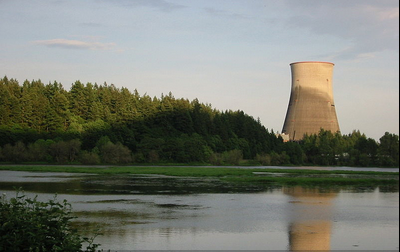


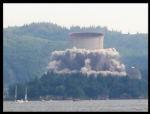


 Joseph Stevenson